Permit and inspection requirements for a panel upgrade in Rocky Mount
Yes, you need a permit for a panel upgrade in Rocky Mount NC. Here is exactly how the Nash County process works, what inspectors check, and how long it takes.
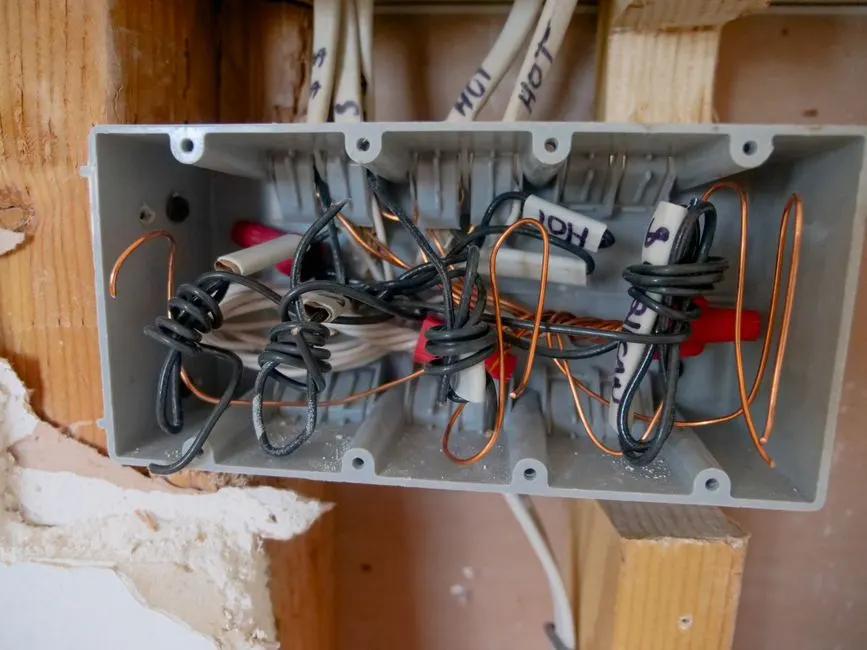
Yes, you need a permit for a panel upgrade in Rocky Mount NC. The City of Rocky Mount and Nash County both require an electrical permit before any panel replacement or service upgrade begins, and the work must pass a municipal inspection before the utility will reconnect power. The permit itself costs between $75 and $150 for a typical residential panel swap in 2026, and the inspection usually takes 15 to 30 minutes once the job is ready. What follows is the exact process we follow on every panel upgrade we run in Rocky Mount, from filing the application to getting the green sticker.
Panel upgrade permit requirements Rocky Mount NC is the set of local rules that govern how a residential or commercial electrical service change gets approved, inspected, and energized. Those rules exist because a panel is the single point where utility power enters your home, and a mistake there can burn down a house. We have pulled hundreds of permits in this area, and the process is predictable once you know the steps.
Do you need a permit for a panel upgrade in Rocky Mount NC?
Do you need a permit for a panel upgrade in Rocky Mount NC? Yes - every panel replacement, service upgrade, meter base change, or subpanel addition requires a permit, with no exceptions for "like-for-like" swaps. Even if you are replacing a 200-amp panel with another 200-amp panel of the same brand, the city wants to see the work.
The reason is straightforward. An inspector needs to verify that the new panel is properly bonded, that the grounding electrode conductor is correctly sized, and that the breaker schedule matches the load calculations. None of that is visible after drywall goes back up. The permit is what forces a second set of eyes onto the work before the meter gets re-sealed.
Homeowners sometimes ask whether a permit is needed if the panel is inside a garage or on an exterior wall. It is. Location does not change the requirement. Neither does the size of the upgrade. A 100-amp to 200-amp change and a straight replacement both trigger the same permit.
If you are working with a licensed electrician, they will pull the permit for you. If you are doing the work yourself as a homeowner, North Carolina allows owner-occupied single-family homeowners to pull their own electrical permit, but you still have to pass the same inspection. There is no homeowner exemption from the inspection itself.
Who issues the permit in Rocky Mount and Nash County
Rocky Mount sits on the line between Nash County and Edgecombe County, and the permitting authority depends on which side of the city your property falls on. Most of Rocky Mount is in Nash County, and the Nash County Inspections Department handles the electrical permit and inspection for those addresses. Properties on the Edgecombe County side go through Edgecombe County inspections.
If your home is inside the Rocky Mount city limits, the city's Development Services office coordinates the permit intake, but the actual electrical inspection is performed by the county inspector assigned to your area. In practice, you file once and the county inspector shows up. You do not need to file separately with both the city and the county.
This matters because we see homeowners call the wrong office and lose a week. If you are unsure which county you are in, check your property tax bill or the address on your utility account. The county listed there is the one that will inspect your panel.
For addresses in the older neighborhoods - the mill houses near Mill Village electrical panel upgrade territory, for example - the panel is often a 60-amp fuse box that has never been permitted for anything. Those jobs need a permit and usually a service upgrade at the same time, because the existing service drop cannot support a modern 200-amp panel.
What the permit application actually requires
The permit application for a panel upgrade in Rocky Mount is short, but it asks for information most homeowners do not have memorized. Here is what we submit on every job:
- Property address and parcel number - pulled from the Nash County or Edgecombe County tax records.
- Scope of work - a plain-language description such as "replace 100-amp panel with 200-amp panel, upgrade meter base, install new grounding electrode system."
- Amperage and voltage - the existing service size and the proposed service size.
- Contractor information - license number, insurance certificate, and contact details.
- Load calculation - a worksheet showing the new panel can carry the calculated load. This is required for any service upgrade above the existing amperage.
- Site plan or sketch - only needed if the panel is being relocated.
The load calculation is the part that trips people up. A 200-amp panel is not automatically approved just because it is bigger. The inspector wants to see that the calculated demand - based on square footage, appliance count, HVAC tonnage, and any EV or solar additions - fits within the new service rating. If you are adding an EV charger, for example, the calculation has to account for that continuous load.
If your panel is being moved - say from a kitchen wall to the garage - the application needs a sketch showing the new location and the routing of the service conductors. Relocations are common in older Rocky Mount homes where the original panel was installed in a hallway or closet that no longer meets working-clearance rules. We handle those under our electrical panel relocation Rocky Mount NC service, and the permit is part of the job.
Once the application is submitted, Nash County typically issues the permit within one to three business days. There is no waiting period for the work to start after that - you can begin the same day the permit is issued.
What inspectors look for during a panel upgrade inspection
Inspection requirements for a panel upgrade in Rocky Mount North Carolina are based on the 2023 North Carolina Electrical Code, which adopts the NEC with state amendments. The inspector is not there to nitpick. They are checking a specific list, and every item on it is something we verify before we call for inspection.
Grounding and bonding
The grounding electrode conductor must be correctly sized for the new service - typically 6 AWG copper for a 200-amp service, 4 AWG for a 400-amp service. It has to land on a listed grounding electrode, usually a ground rod or the metal water pipe if it qualifies. Bonding jumpers on the water heater and gas line are checked too. This is the number one item that fails on older homes, because the original grounding system was often a single undersized rod driven in the 1960s.
Working clearance
The panel needs 36 inches of clear space in front, 30 inches wide, and 6.5 feet of headroom. No shelves, no water heaters, no storage. If your panel is in a closet or under a stairwell, the inspector will fail it. We relocate those panels rather than argue about it.
Breaker schedule and labeling
Every breaker has to be labeled with what it controls. "Lights" is not enough. The inspector wants to see "Kitchen receptacles," "Master bedroom outlets," "HVAC condenser." We print a typed schedule and affix it inside the panel door before inspection.
Torque and terminations
Loose neutrals and grounds are a common failure. The inspector will tug on a few conductors to check. We torque every terminal to the manufacturer's specification and mark the panel with the torque values, which is now a code requirement on many panel brands.
AFCI and GFCI protection
New panel installations in North Carolina require AFCI protection on most 120-volt branch circuits in dwelling units, and GFCI protection in kitchens, baths, garages, outdoors, and within six feet of sinks. If your old panel did not have these, the new one will, and the inspector will test them.
How long does a panel upgrade inspection take in Rocky Mount NC?
How long does a panel upgrade inspection take in Rocky Mount NC? The on-site inspection itself takes 15 to 30 minutes for a standard residential panel upgrade. The scheduling window is the longer part - expect one to three business days from the time you call for inspection to the time the inspector arrives.
There are two inspections on most panel upgrades. The first is a rough-in inspection, done after the panel is mounted and wired but before the cover is on and before the utility reconnects. The second is a final inspection, done after the meter base is set and the service is energized. Some jurisdictions combine them for simple swaps; Nash County usually requires both on a service upgrade.
If the inspector finds a problem, they will leave a correction notice. You fix the item, call for re-inspection, and the second visit is usually scheduled within 24 to 48 hours. Most corrections are minor - a missing label, a ground clamp that needs to be tightened, a breaker that needs to be swapped to the correct brand.
The utility reconnect is the final step. Duke Energy Progress will not re-energize the service until they see the passed inspection sticker or receive the inspection result electronically. That reconnect typically happens the same day or the next business day after the final inspection passes.
Common mistakes that fail a panel upgrade inspection
We see the same handful of failures over and over on panel upgrades in Rocky Mount. Avoiding them is not complicated, but they cost homeowners a week or more when they happen.
- Starting work before the permit is issued. The inspector can require you to open walls or remove the panel to verify what was done. It is cheaper to wait two days for the permit.
- Using the wrong breaker brand. A panel listed for one manufacturer's breakers cannot be filled with another brand. Inspectors check this, and it voids the panel's listing.
- Undersized grounding electrode conductor. Reusing the old 8 AWG ground wire on a 200-amp service fails every time.
- No load calculation on a service upgrade. The permit may be issued, but the inspector will ask for the calculation at rough-in.
- Blocked working clearance. A water heater installed in front of the panel is a fail, even if it was there for 20 years.
- Missing AFCI/GFCI protection. If the new panel does not have it, the inspection stops there.
One more: do not let the utility reconnect before the inspection passes. If the meter is re-sealed without a passing inspection, the county can require the meter to be pulled again, and you pay for a second reconnect. We coordinate the inspection and the reconnect so that never happens.
If your existing panel has code violations beyond the panel itself - ungrounded outlets, double-tapped breakers, undersized wire - those need to be corrected before the new panel can pass. We handle that under our electrical code correction Rocky Mount NC service, and we roll it into the same permit so you are not paying for two inspection cycles.
When to call a professional
Call a licensed electrician when your panel is more than 25 years old, when you are adding a large load like an EV charger or a heat pump, when you see rust or scorch marks inside the panel, or when your breakers trip repeatedly. Those are the situations where the permit and inspection process is the easy part - the hard part is doing the work correctly the first time.
Rocky Mount Electric Response pulls the permit, performs the work, schedules the inspection, and coordinates the utility reconnect. We handle panel upgrades every week in Rocky Mount and the surrounding Nash County communities, and we know what the local inspectors look for. If you are not sure whether your project needs a permit, call us and we will tell you straight.
We also work in the older neighborhoods where panel upgrades are most common. In Downtown Rocky Mount electrical panel upgrade projects, for example, the buildings are often 80 to 100 years old and the original service was 60 amps. Those jobs need a full service upgrade, a new meter base, and a new grounding system - all permitted and inspected as one project.
Frequently Asked Questions
Do I need a permit for panel upgrade in Rocky Mount NC?
Yes. Every panel replacement or service upgrade in Rocky Mount and Nash County requires an electrical permit and a passing inspection before the utility will reconnect power. There is no exception for like-for-like swaps. The permit costs $75 to $150 for a typical residential job in 2026.
What are the inspection requirements for panel upgrade in Rocky Mount NC?
The inspector checks grounding and bonding, working clearance, breaker labeling, torque on terminations, and AFCI/GFCI protection. The work must comply with the 2023 North Carolina Electrical Code. Rough-in and final inspections are both required on service upgrades.
How long does panel upgrade inspection take in Rocky Mount NC?
The on-site inspection takes 15 to 30 minutes. Scheduling takes one to three business days. If corrections are needed, re-inspection is usually scheduled within 24 to 48 hours after you fix the issue.
Can I pull my own permit as a homeowner in Rocky Mount NC?
North Carolina allows owner-occupied single-family homeowners to pull their own electrical permit. You still have to pass the same inspection, and the work must meet code. Most homeowners hire a licensed electrician because the inspection risk is high.
What happens if I upgrade my panel without a permit?
The county can require you to remove the panel or open walls to verify the work, and you will pay for a second inspection and possibly a second utility reconnect. Unpermitted work also complicates any future home sale.
Get help with electrical panel upgrade in Rocky Mount
If you are ready to upgrade your panel and want the permit and inspection handled correctly the first time, call Rocky Mount Electric Response at (252) 809-7893. We pull the permit, do the work, and walk it through inspection so you are not stuck without power.