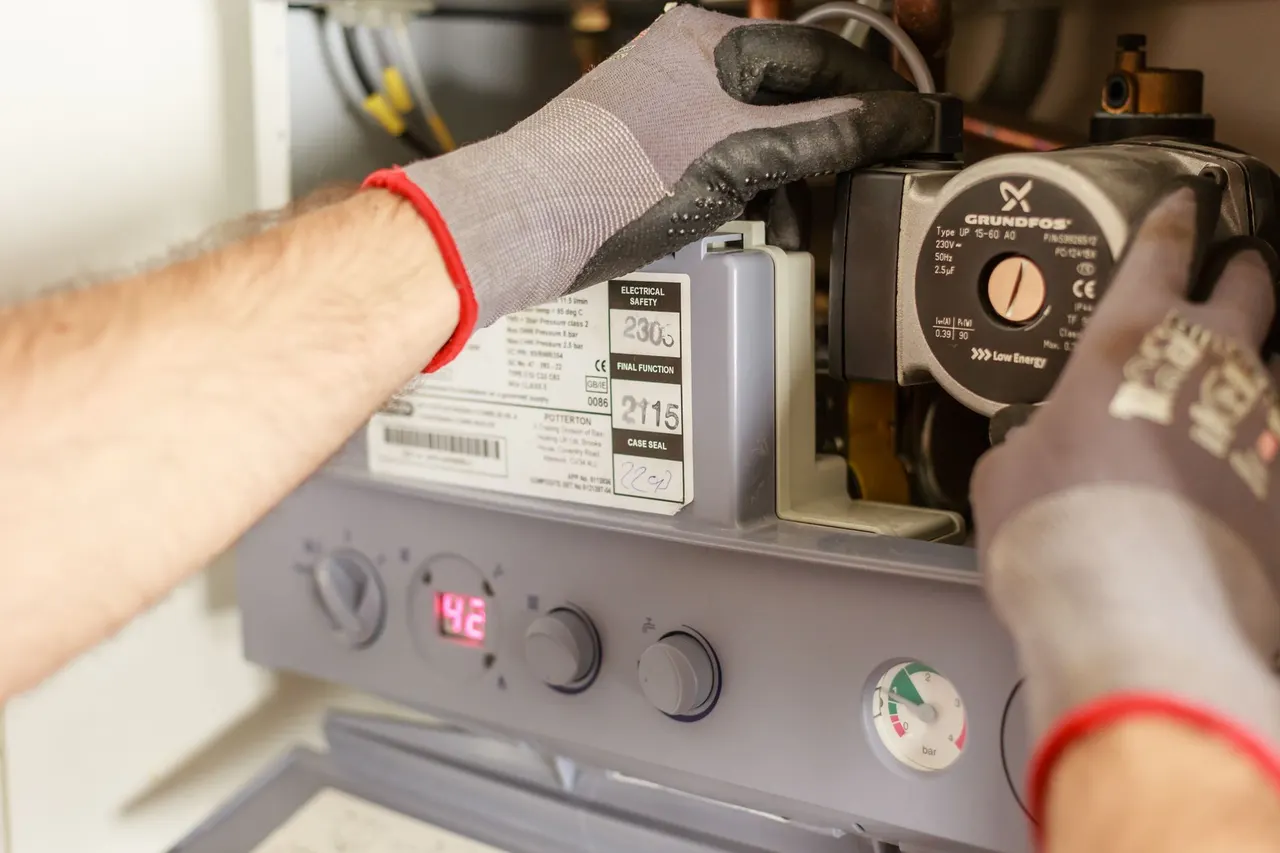
For homes and rentals
If your home panel is a fuse box or trips when the AC starts, we can help. We check the load and explain what size service fits your house.
- Fuse box still in service
- Breaker trips when AC starts
- Panel warm to the touch
A Commercial Electrical Panel Upgrade in Rocky Mount is the difference between a shop that runs and one that trips every time the compressor kicks on. We replace overloaded, rusted, and recalled panels for restaurants, retail, and industrial shops across Nash County. If your lights flicker or your breakers run warm, call (252) 809-7893 before it costs you a shift.
 Load checkBreaker mappingPanel labeling
Every commercial electrical panel upgrade in Rocky Mount starts with a load check and a written scope. You approve the amperage, panel brand, and breaker count before we order material. Here is what is typically in the job, and what we quote separately if your building needs it.
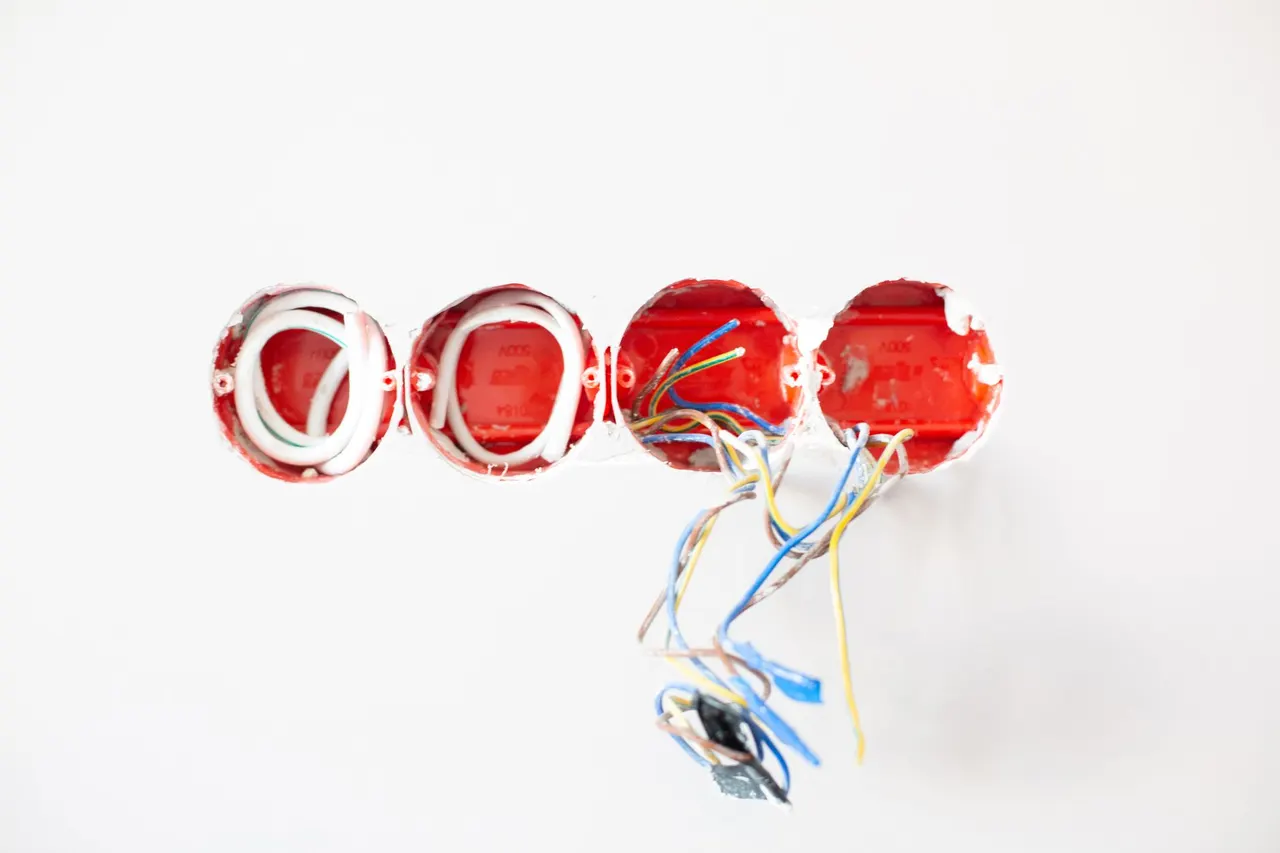
We clamp each circuit, read the meter, and calculate your connected load. You get a written recommendation on 200, 400, or 600 amps with the panel brand and breaker count listed. This visit is free.
We install a Square D, Eaton, or Siemens panel rated for the new amperage, with UL listed breakers sized per circuit. Every breaker is labeled by area so your staff can find the right one during a trip.
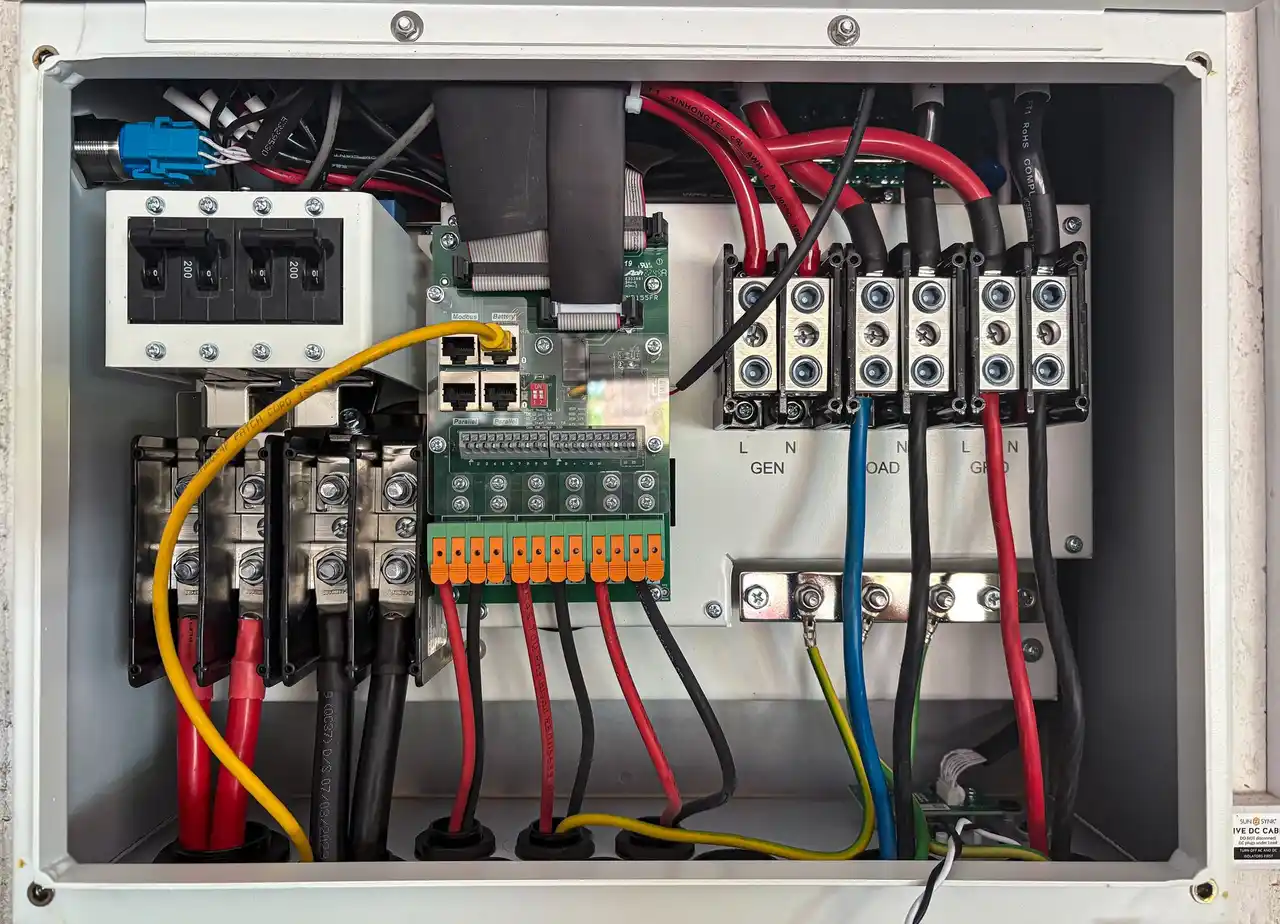
A proper grounding wire and bonding jumpers are part of the job, not an add-on. We bring the ground up to NEC 2020 and NEC 2023 so the inspector signs off and your insurance review is clean.
We pull the electrical permit, post it on site, and meet the city inspector for rough and final. You get the signed inspection card and a photo record of the panel before we close the wall.
Every circuit gets a typed label, and we photograph the panel interior before the cover goes on. You keep the label sheet and photos for your records. It makes the next service call faster for any electrician.
The approach is the same for a home and a business. What changes is the access, the schedule and who needs the paperwork.
If your home panel is a fuse box or trips when the AC starts, we can help. We check the load and explain what size service fits your house.
If your business panel trips during a rush or you are adding equipment, we can help. We check the load and explain what amperage your building needs.
A plain-language look at what Commercial Electrical Panel Upgrade involves and when it is needed.
See how it worksA Commercial Electrical Panel Upgrade in Rocky Mount means pulling the old service panel, meter socket, and service entrance cable, then setting a new panel with breakers sized for your actual connected load. We check the grounding wire, torque every lug to spec with a torque screwdriver, and label each circuit so the next electrician knows what feeds what. Most jobs land between 200 and 400 amps for commercial spaces.
Older buildings around Rocky Mount Mills and Downtown Rocky Mount still run 100-amp fuse boxes or panels with double-tapped breakers and no GFCI protection. Add a walk-in cooler, an EV charger, or a second oven and the panel is already over its limit. A commercial electrical panel upgrade in Rocky Mount North Carolina is how you stop nuisance trips and pass inspection without rewiring the whole building.
A commercial panel upgrade is sized to your real load, not the label on the old box.
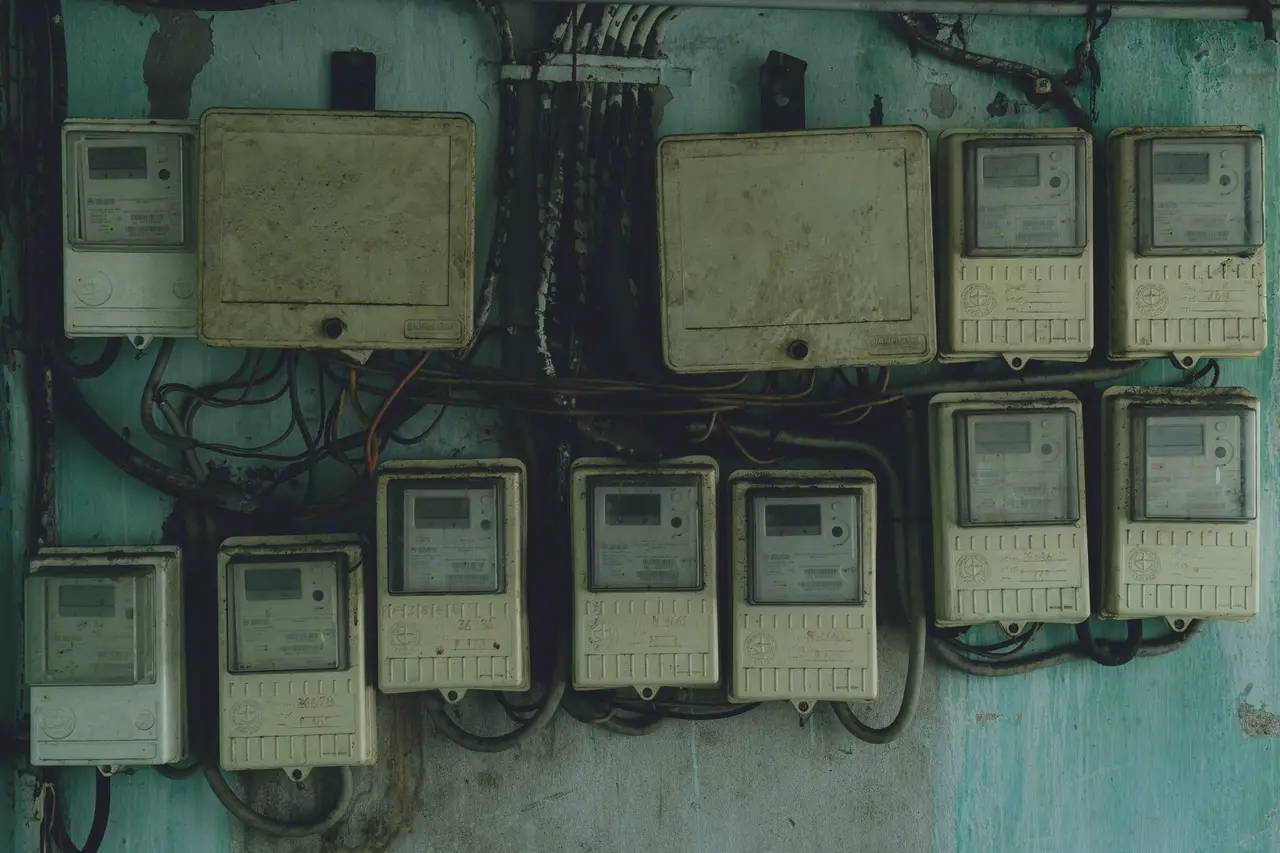
You get a written scope, a permit, and a schedule before we cut power. Here is what the job looks like from the first call to the final inspection.
We walk the building, read the meter, and clamp each circuit to see what you actually draw. You get a load calculation and a recommendation on 200, 400, or 600 amps. This visit takes about an hour and costs nothing.
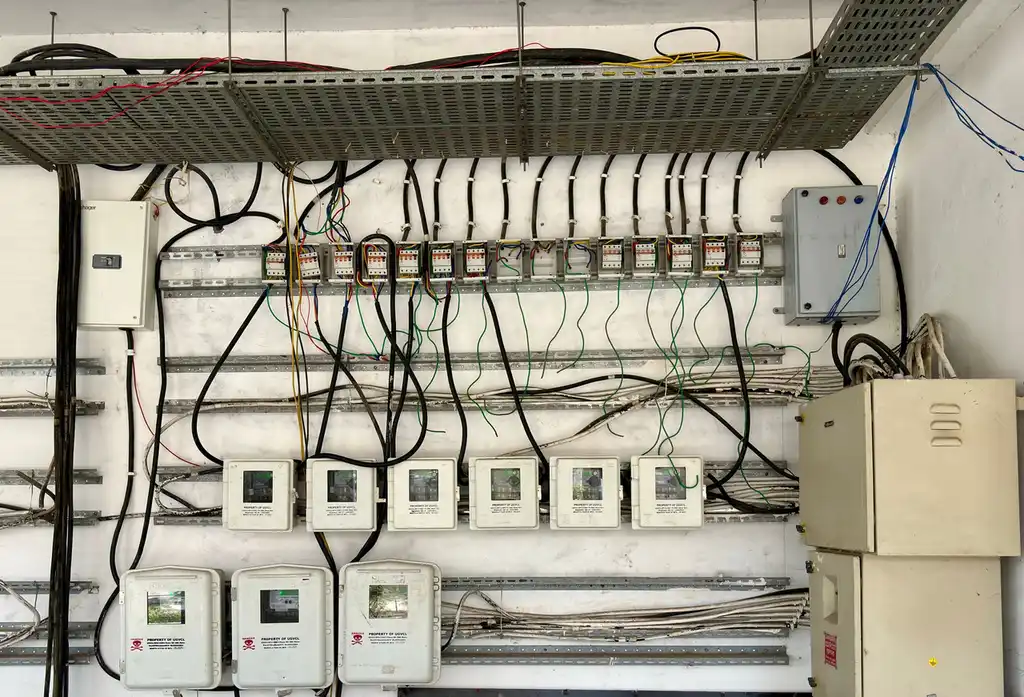
We pull the electrical permit with the city and write the scope: panel brand, amperage, breaker count, meter socket, and grounding. You approve it before we order material. Permits in Rocky Mount usually clear in two to five business days.
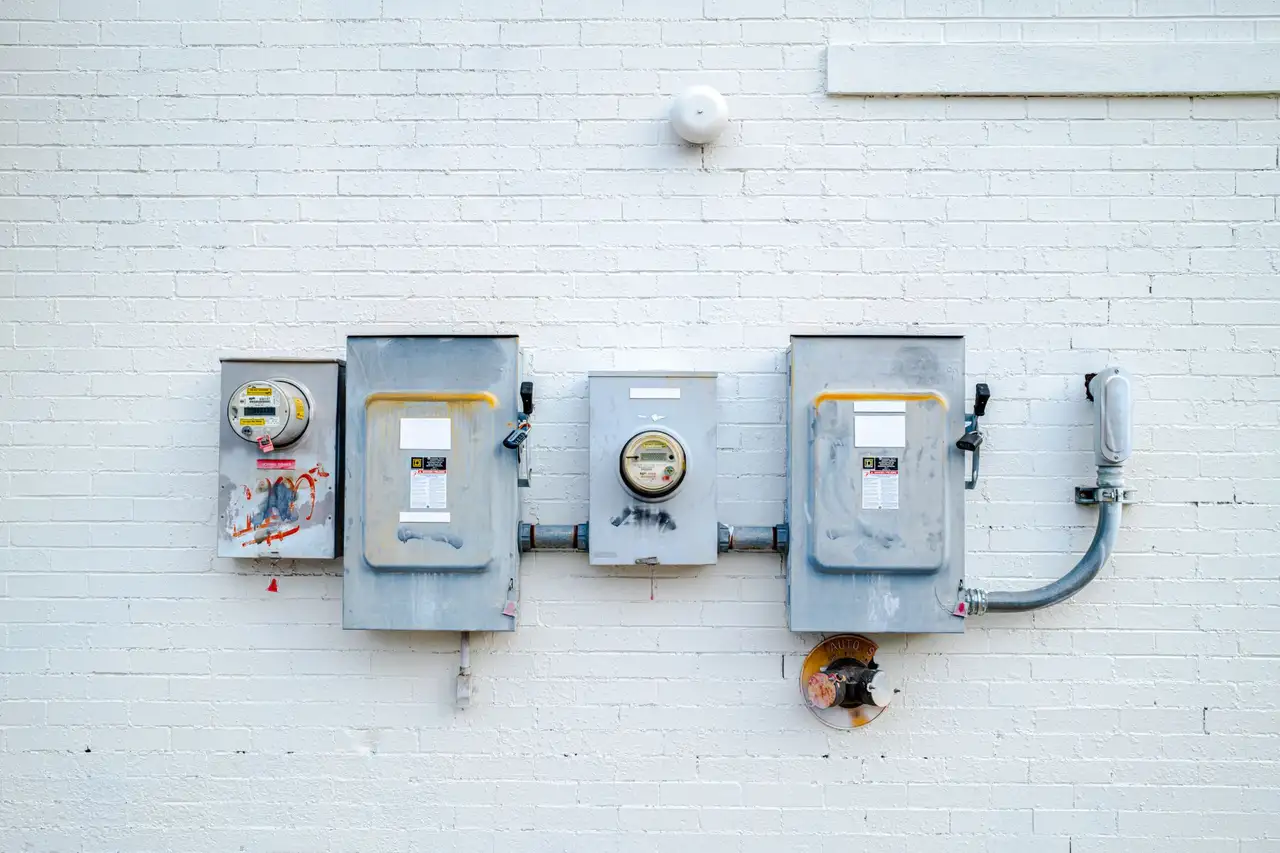
We schedule the outage around your hours, often a Sunday or after close. The old panel, meter socket, and service cable come out. We protect floors and counters, and keep the work area taped off while the wall is open.
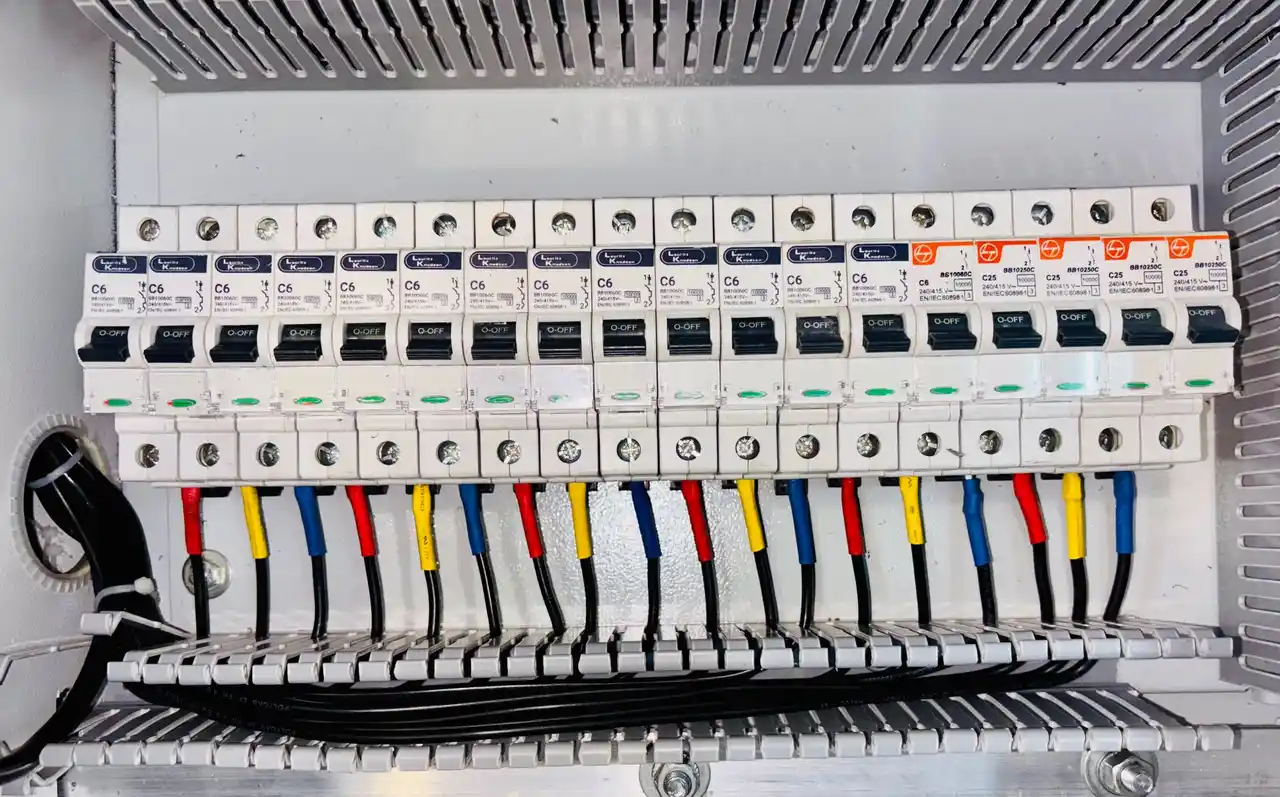
New service entrance cable goes in, then the panel, grounding wire, and meter socket. Every lug gets torqued with a torque screwdriver to the manufacturer spec. Breakers are labeled by circuit and area so your staff can find the right one fast.
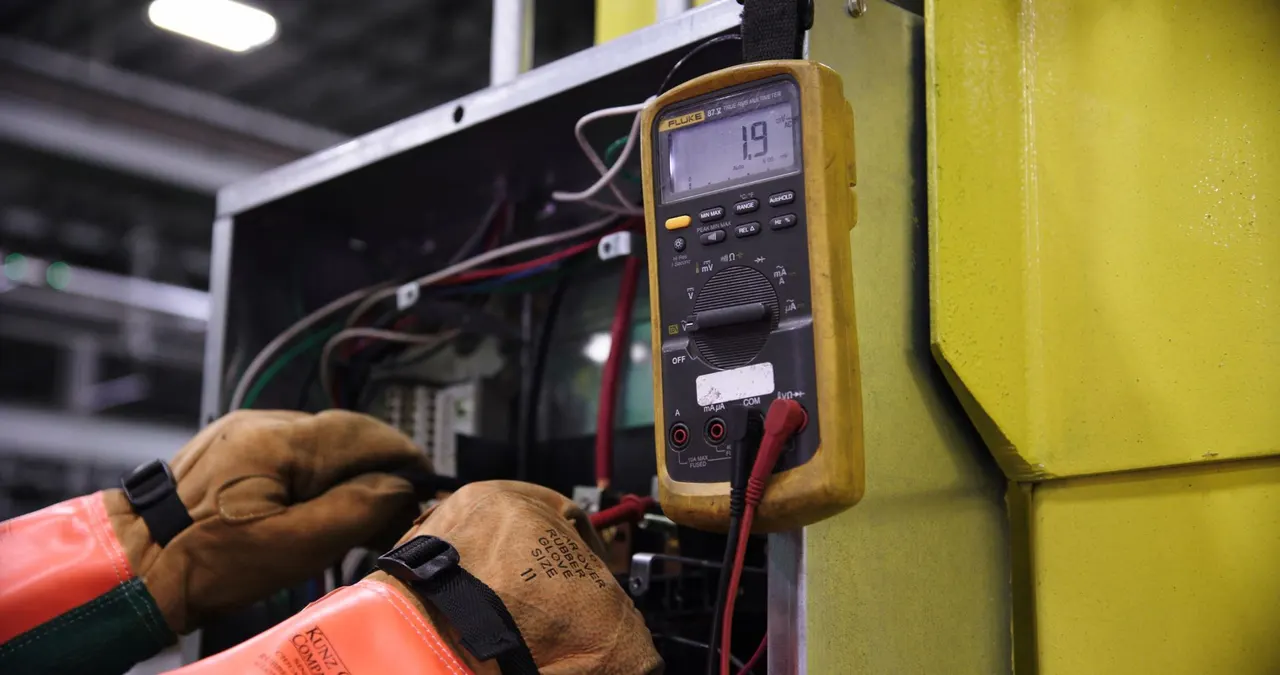
We power up, check voltage on each leg with a multimeter, and trip every breaker to confirm it resets clean. The city inspector signs off, and we hand you the label sheet and a photo record of the panel. Total downtime is usually four to eight hours.
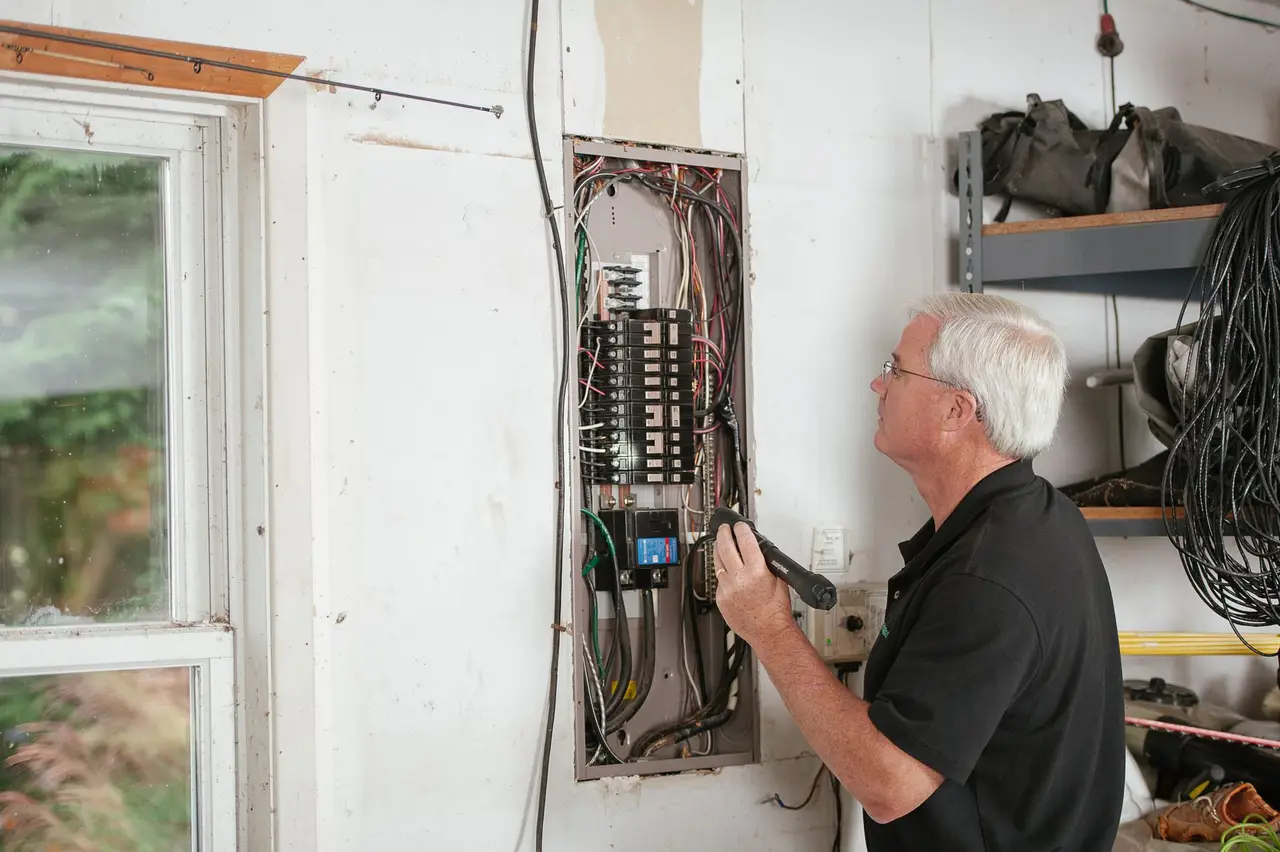
Move across a circle, or focus it and press Enter, for an illustrative thermal view of the photograph.
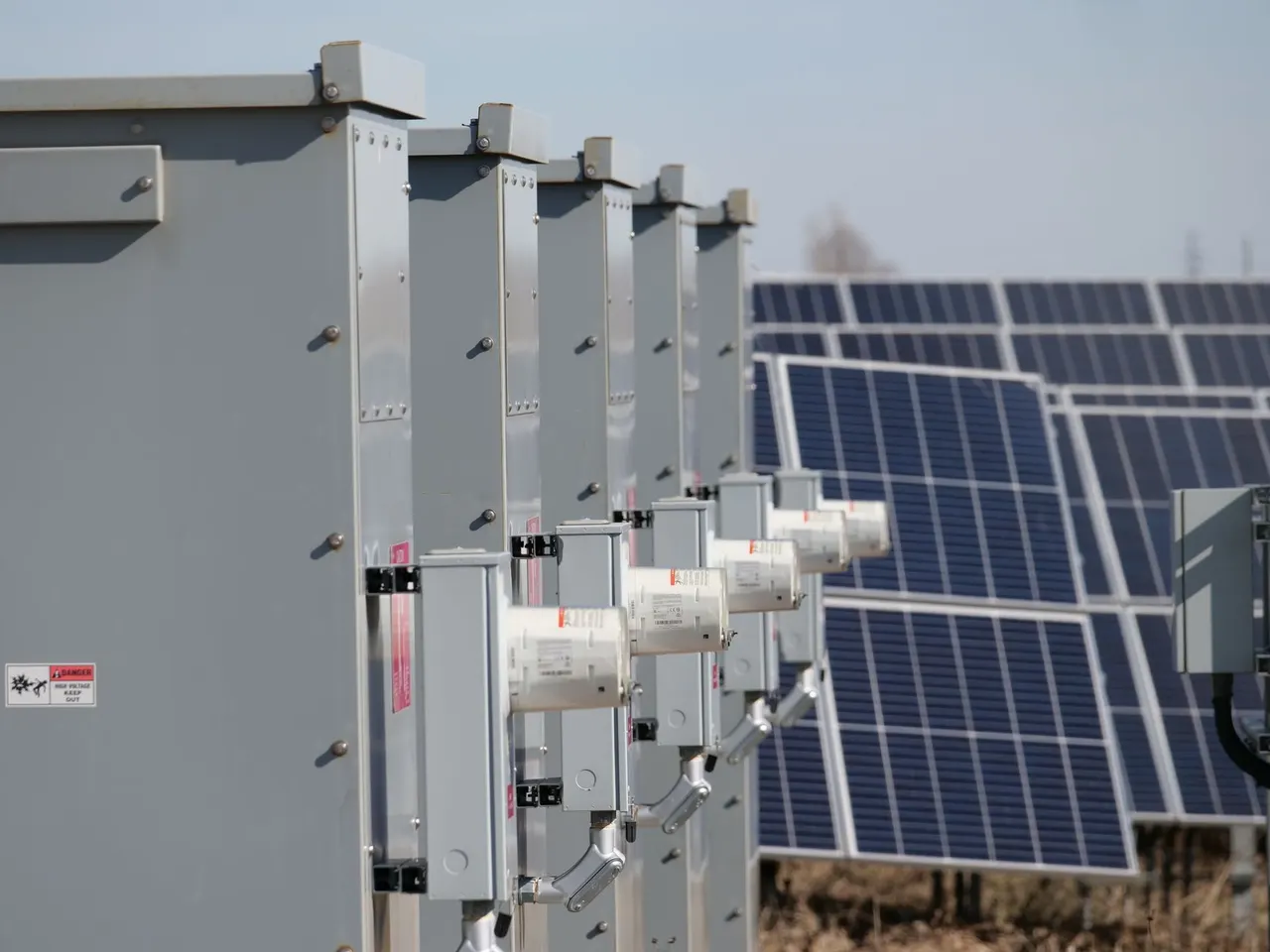
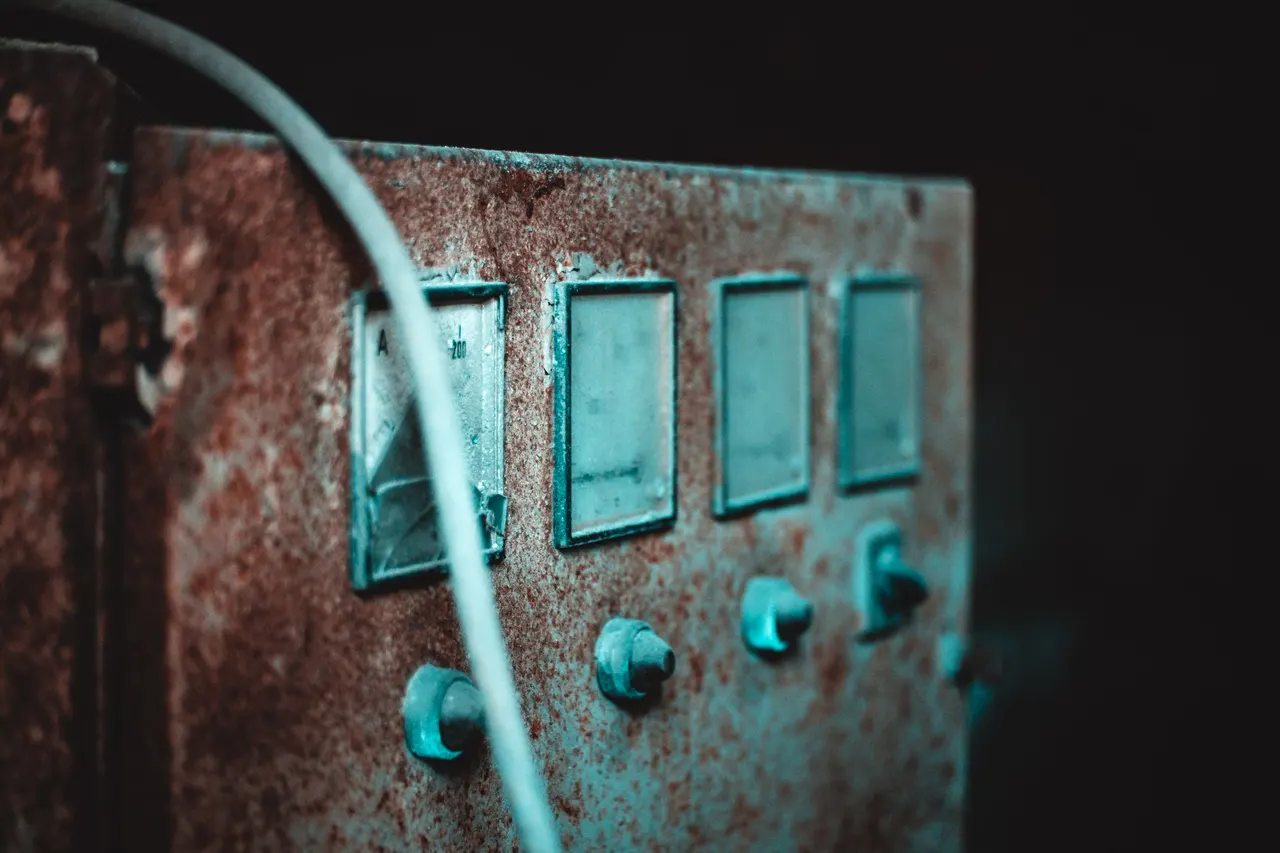
We clamp each circuit under load to see the real amperage draw. That reading decides whether you need 200, 400, or 600 amps.
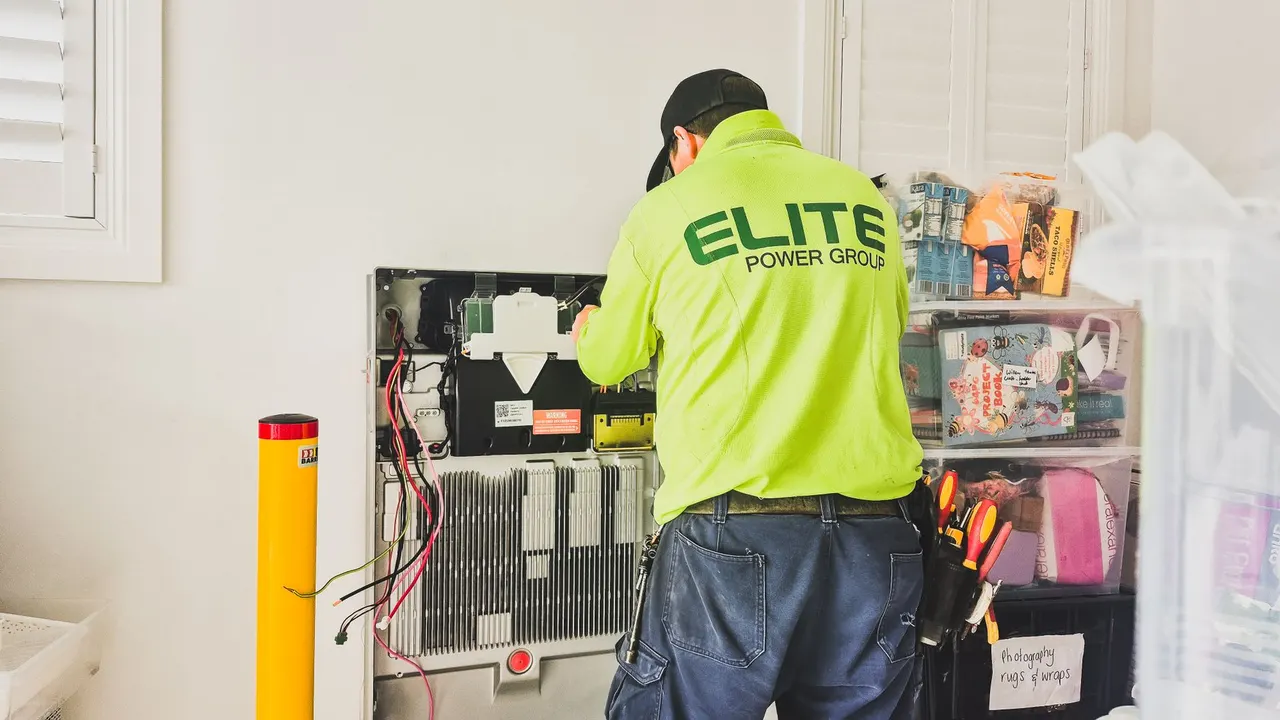
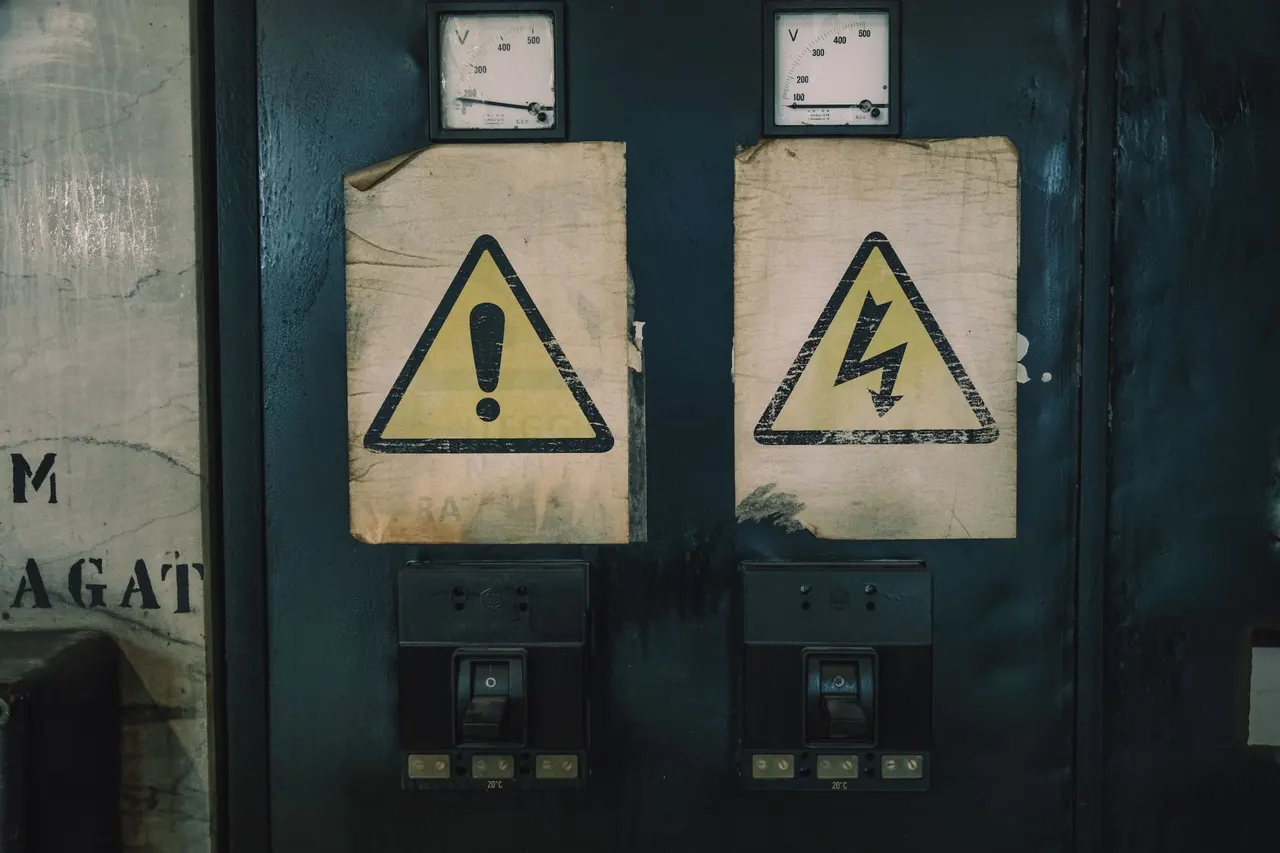
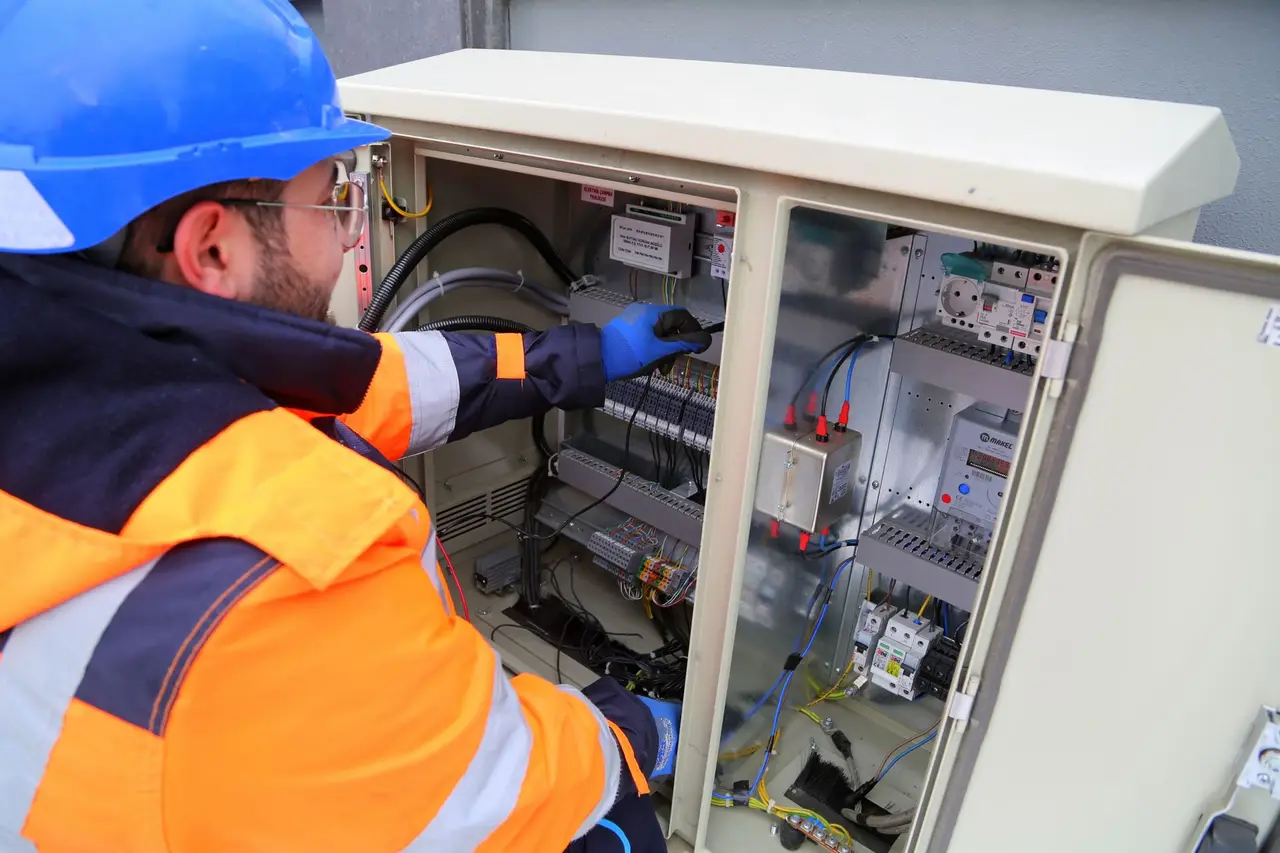
We verify voltage on each leg before and after the swap, and confirm the panel is dead before we touch a wire.
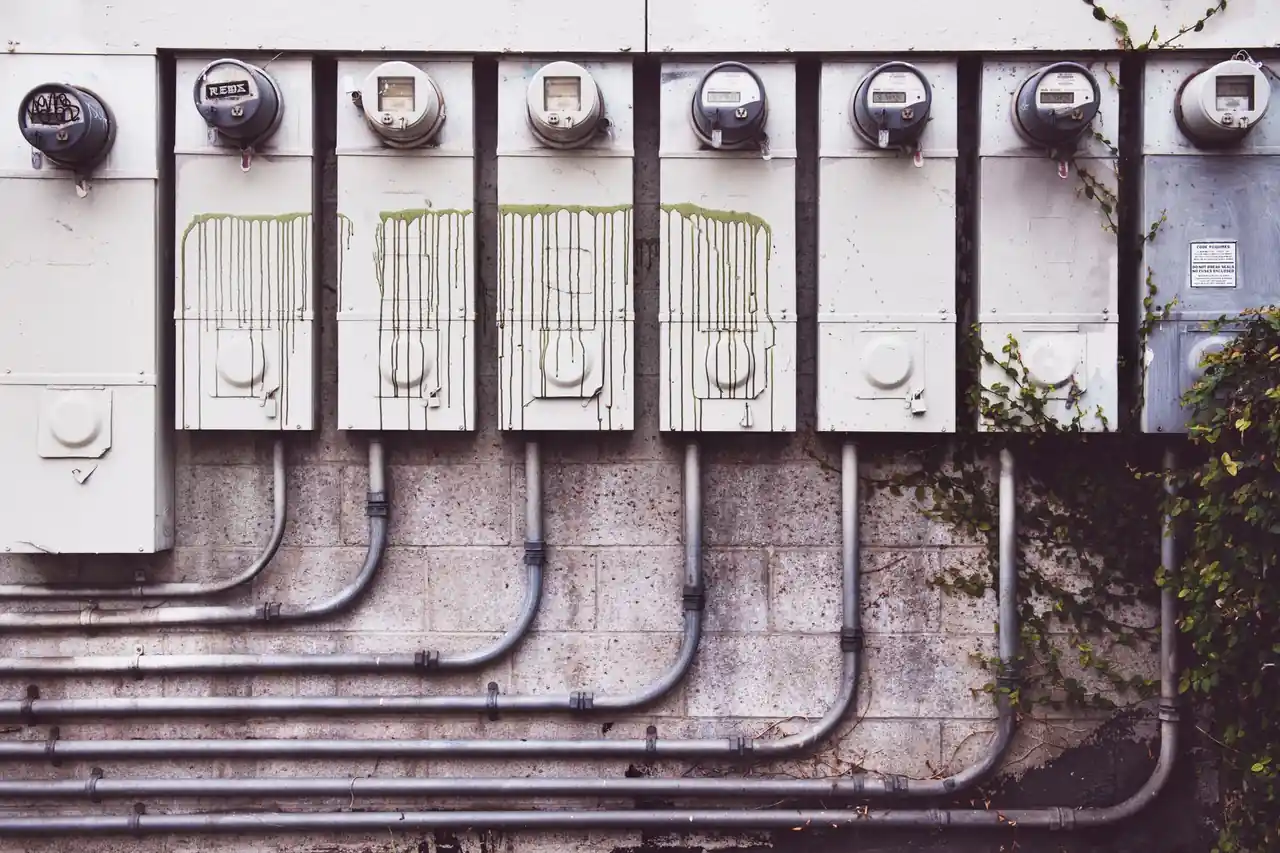
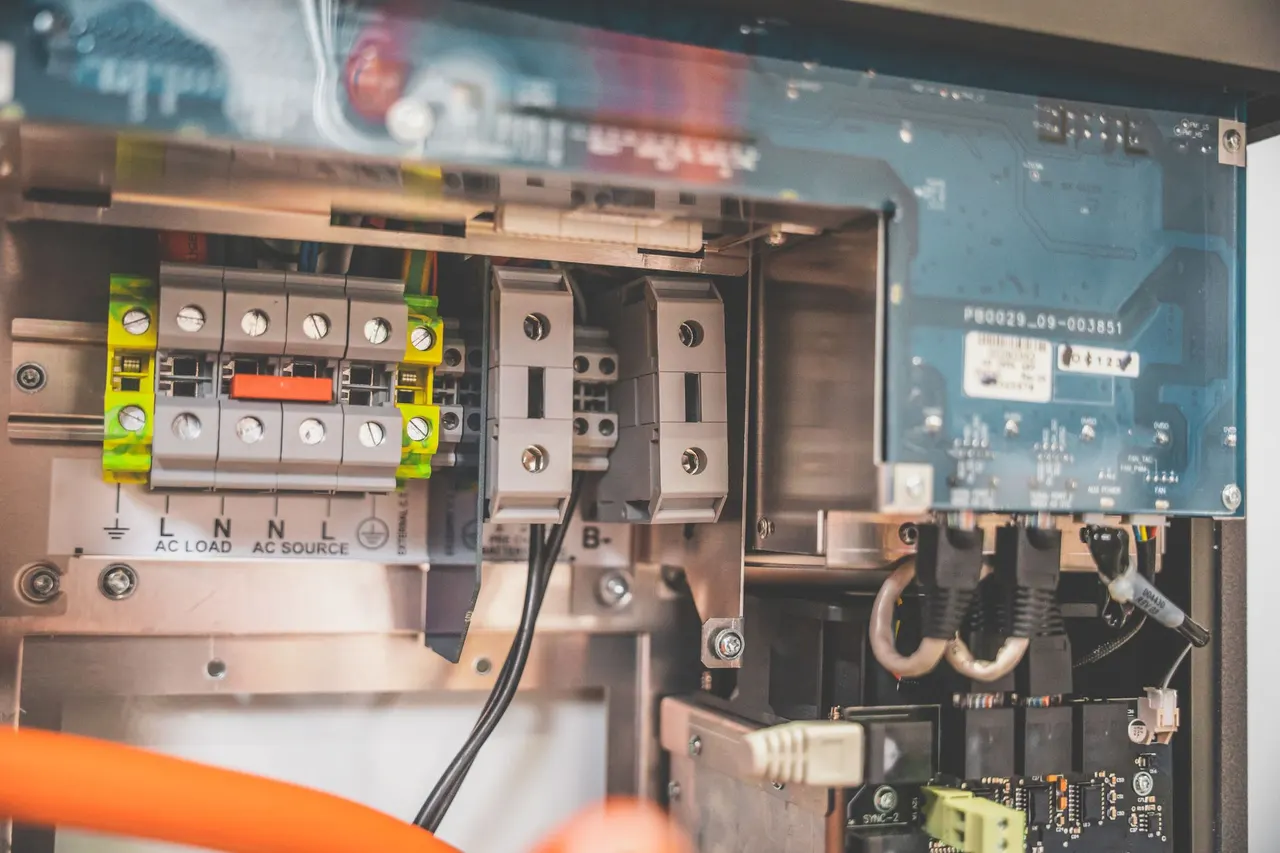
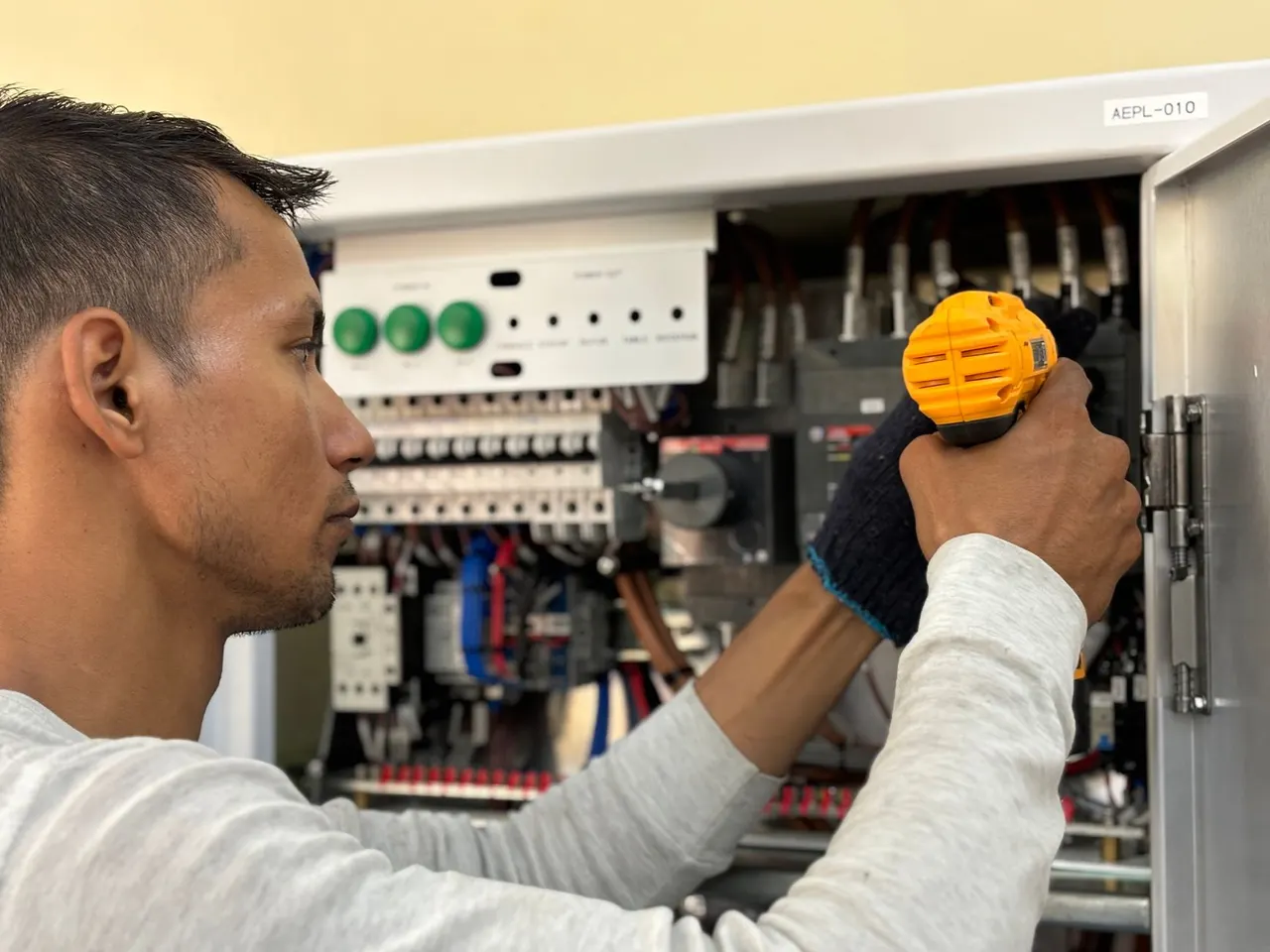
Every lug on the main and branch breakers gets torqued to the manufacturer spec. Loose lugs are a leading cause of panel heat.
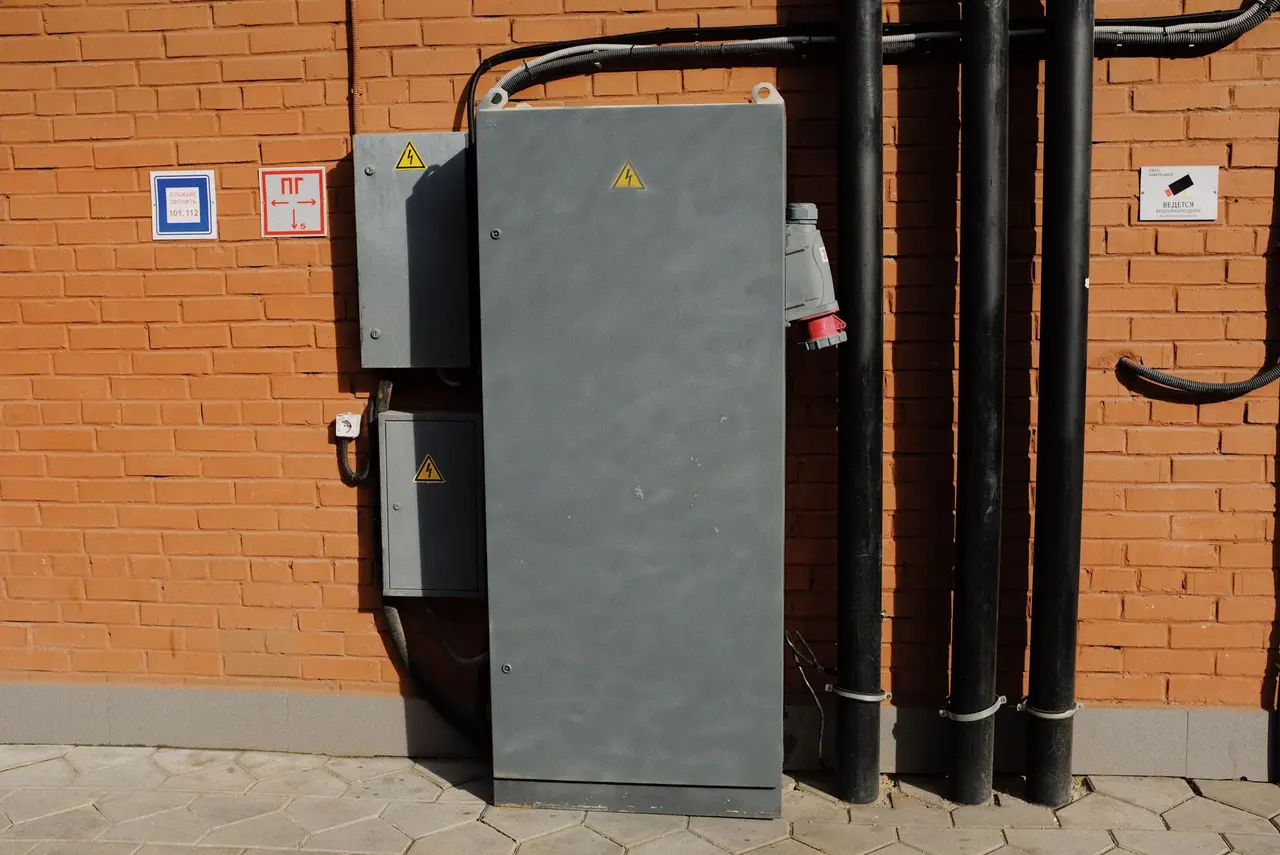
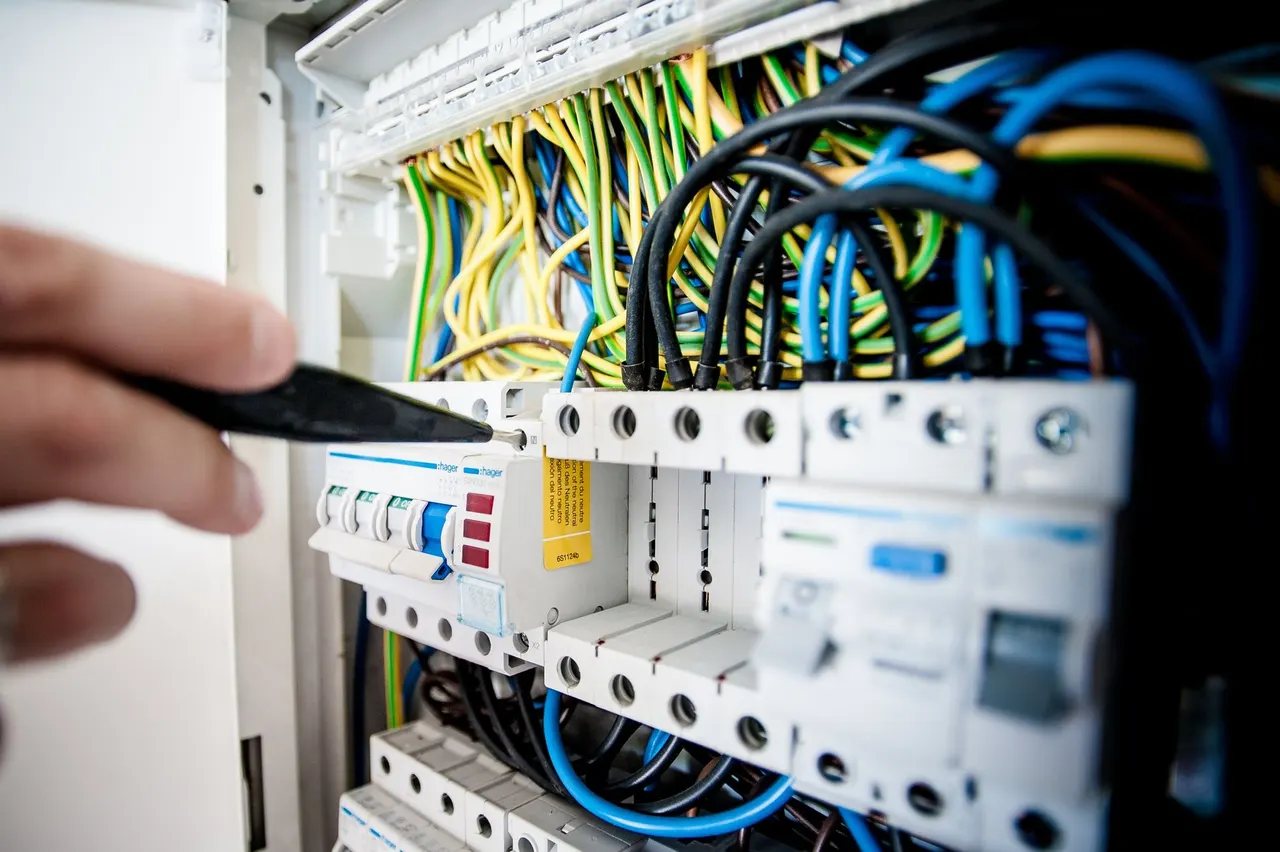
We map every circuit to its breaker so the label sheet is accurate. Your staff can kill the right breaker without guessing.
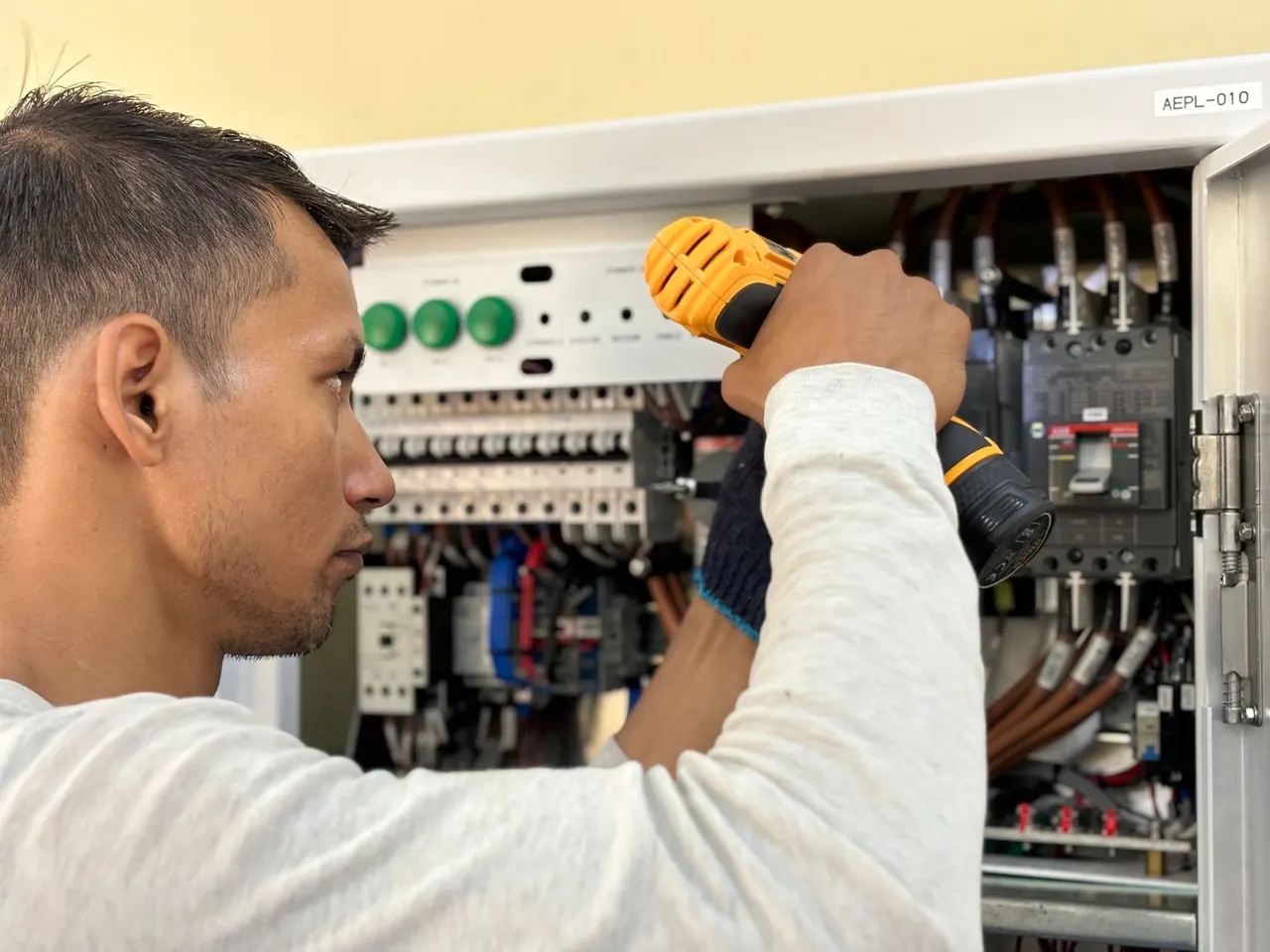
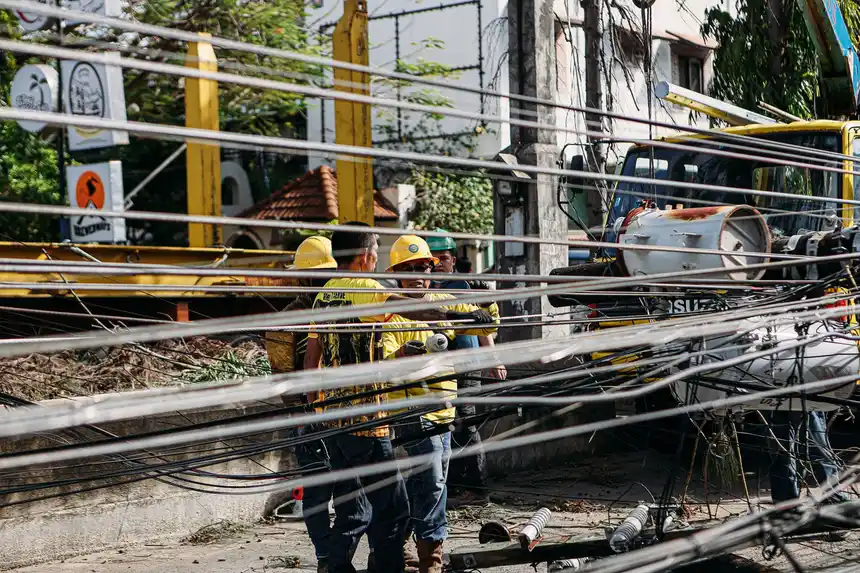
Service entrance cable is heavy and the pull is tight. We use a cable puller and insulated gloves to set the new feeder safely.
Thermal views are illustrative, generated from the photographs.
We stock Square D and Eaton commercial panels and breakers. Both brands have the bus ratings and breaker options we need for 200 to 600 amp services.
When the meter base is cracked or undersized, we replace it with a Milbank or Square D socket rated for the new amperage.
We follow the current National Electrical Code for grounding, bonding, GFCI protection, and labeling. That is what the city inspector checks, and it is what keeps your insurance review clean.
Before we open the panel, we lock out the service and tag it. No one energizes the equipment while we are working. It is a safety rule we do not skip, even on a one-hour repair.
We move circuits between the two legs so neither phase carries more than its share. Balanced phases mean fewer nuisance trips and longer motor life on compressors and coolers.
We pull the electrical permit, post it, and meet the inspector for rough and final. You get the signed card and a photo record. No chasing signatures or re-inspection fees.
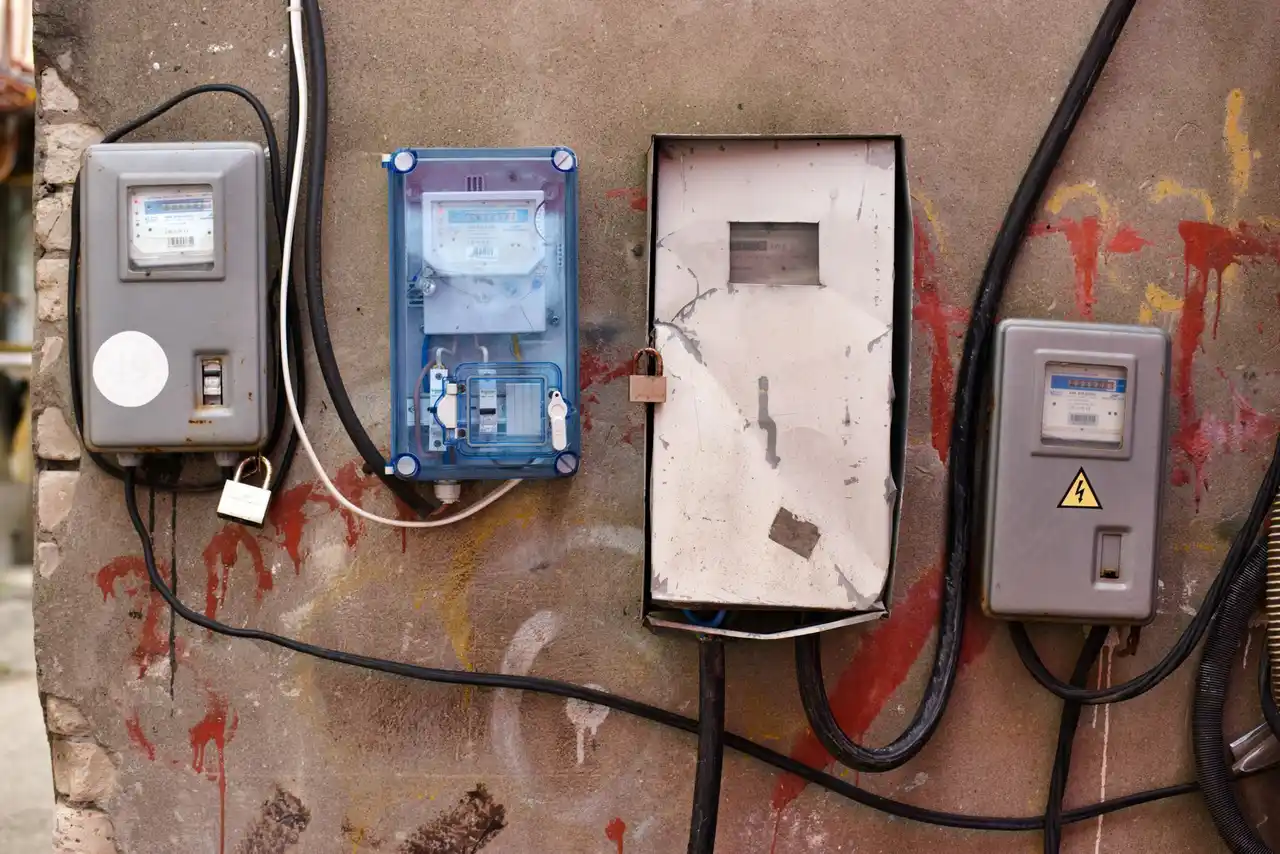
A Downtown Rocky Mount restaurant adds a second oven and a bigger hood, and the 200-amp panel is already near its limit.
We run a load calculation, quote a 400-amp service with a new meter base, and schedule the outage for a Sunday morning. The permit and inspection are handled in the same week.
Outcome: The kitchen runs both ovens and the hood without tripping. The owner has breaker space left for a future walk-in.
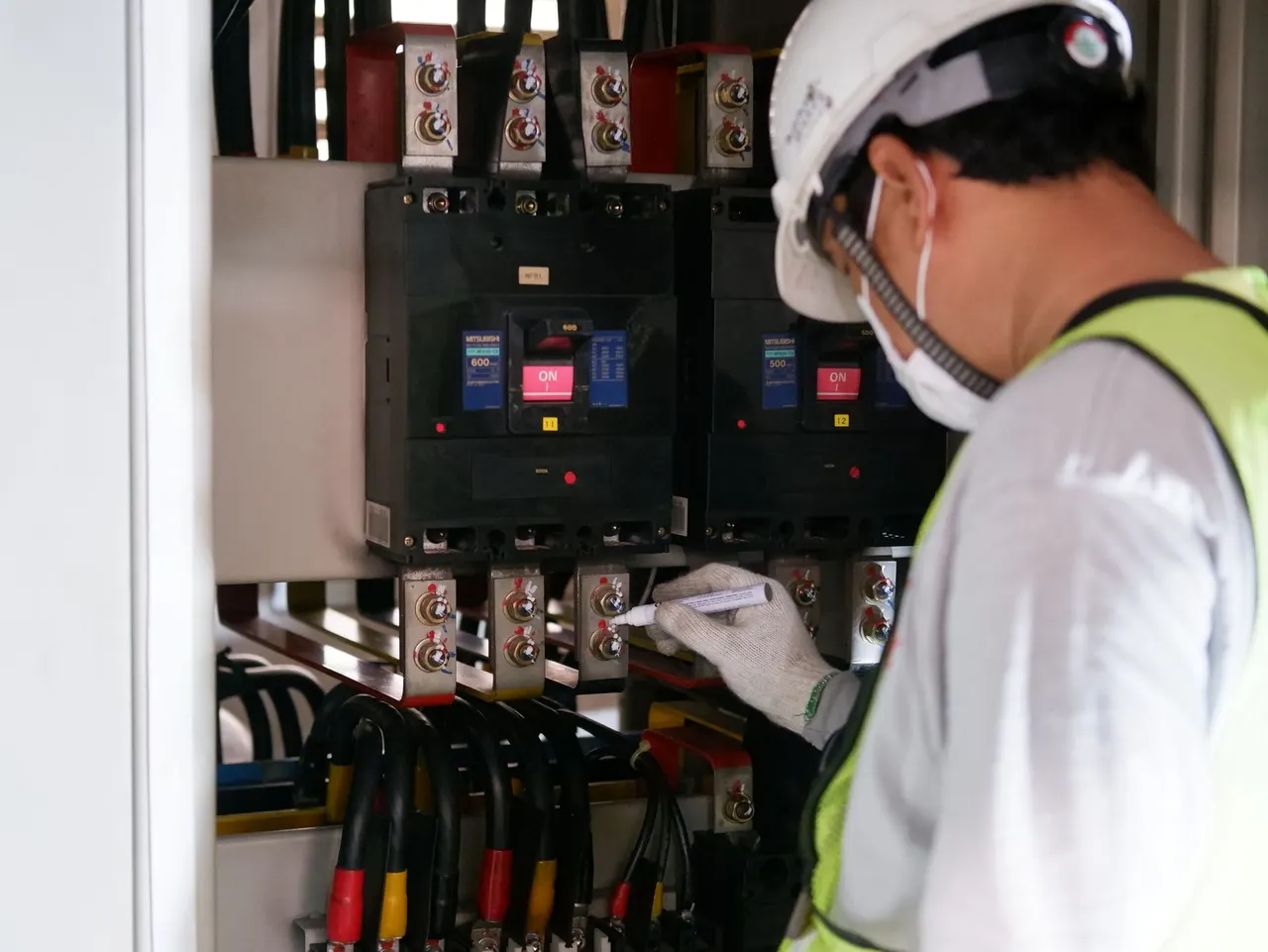
A West Haven retail strip has two units with fuse boxes and the landlord needs them insurable.
We replace both fuse boxes with 200-amp panels, add GFCI breakers, and label every circuit. We meet the inspector and provide photo records for the landlord.
Outcome: Both units pass inspection and the landlord gets a clean insurance review. Tenants lose less than a day of business.
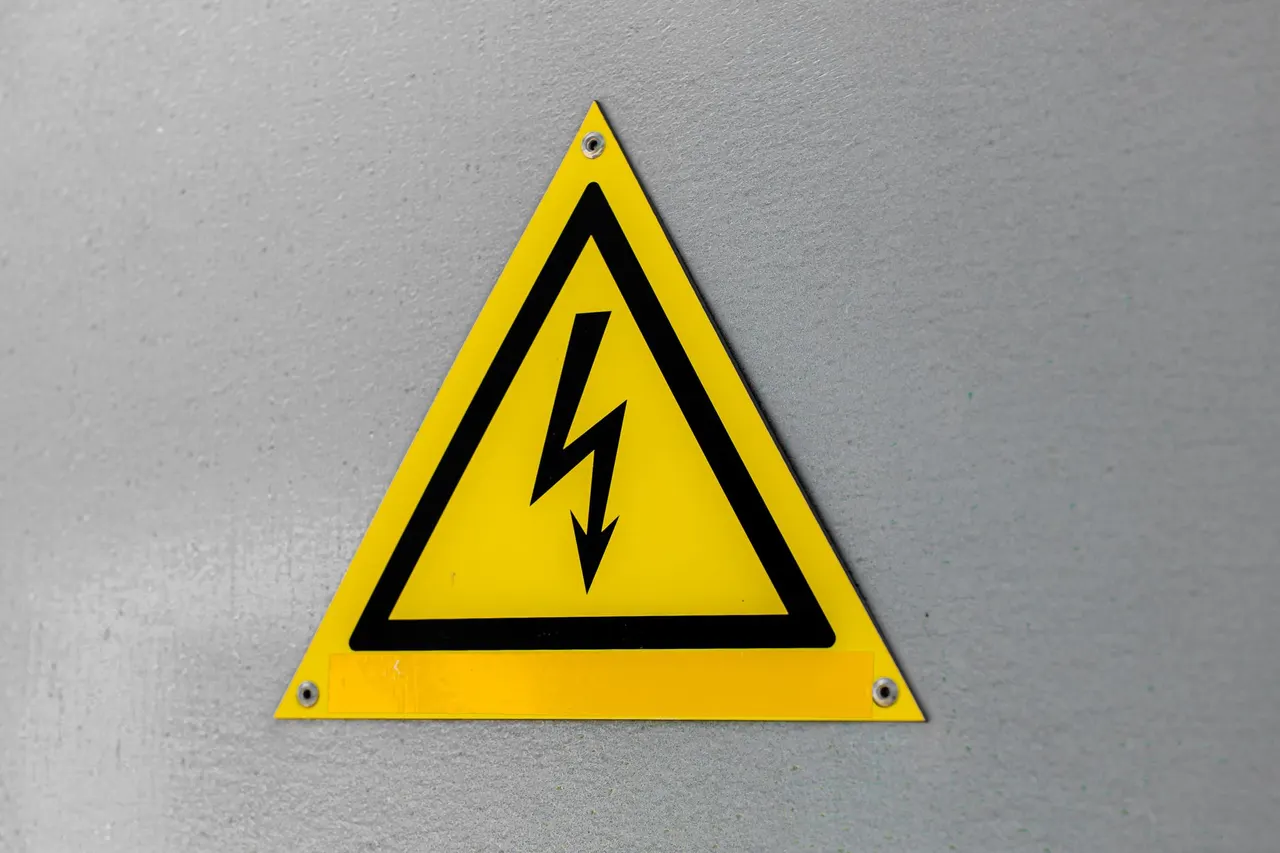
A Rocky Mount Mills shop adds two Level 2 EV chargers and a larger air compressor.
We clamp the existing circuits, upsize the service to 400 amps, and install a subpanel for the chargers. The compressor gets a dedicated breaker sized for its startup draw.
Outcome: Chargers and compressor run together without tripping. The shop avoids a second upgrade when it adds more equipment.
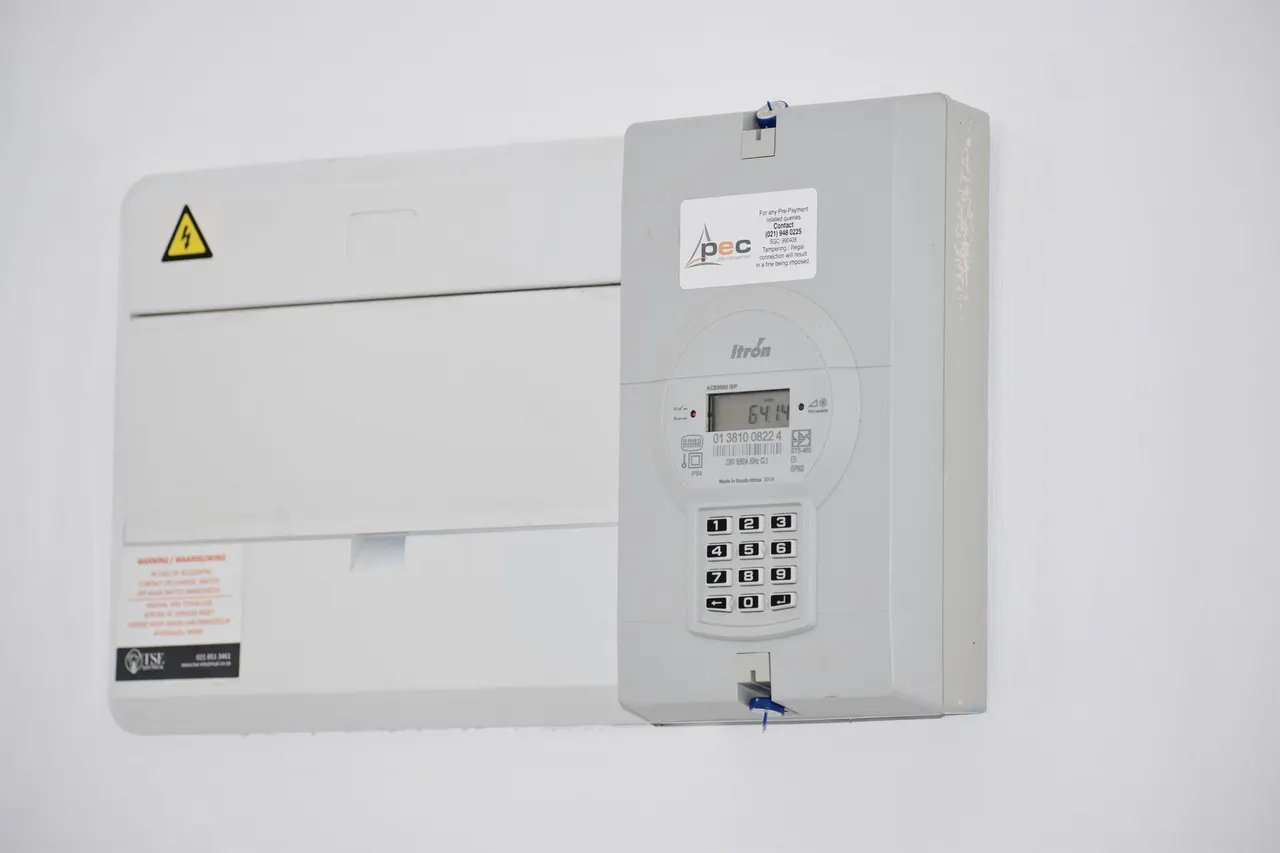
A Battleboro warehouse has a rusted panel and flickering lights after storms.
We replace the panel and meter socket, check the grounding electrode, and install a whole-building surge protector. The service entrance cable is replaced while the wall is open.
Outcome: Lights hold steady and the panel is sealed against moisture. The surge protector guards the forklift chargers and office equipment.
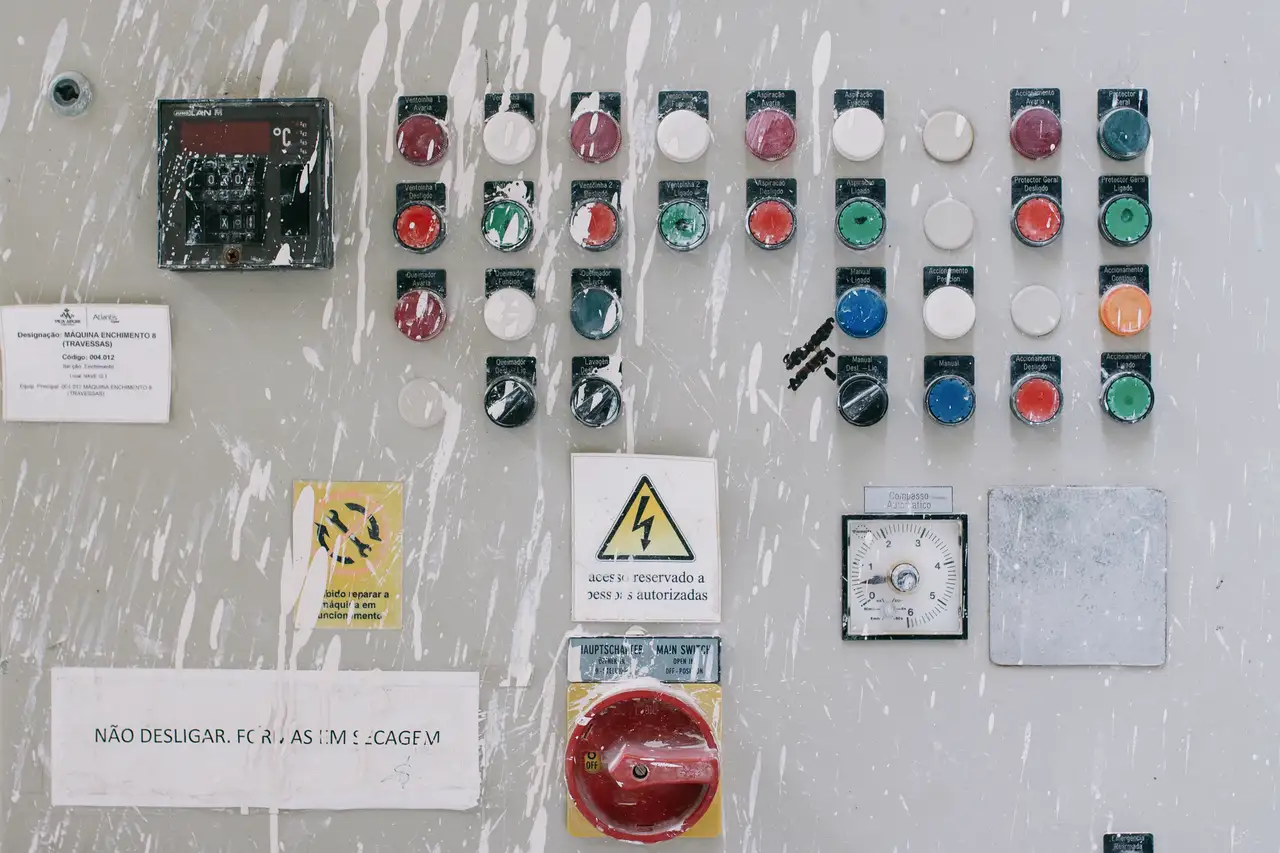
Rocky Mount commercial buildings split into two groups: older downtown and mill-era structures with 100-amp fuse boxes or undersized panels, and newer builds along the 27804 corridor that are already near capacity. Summer heat pushes compressors and AC units hard, and that is when we get the most tripping calls. Winter brings its own load with electric heat and hood systems.
The city follows NEC 2020 and NEC 2023, so grounding, GFCI, and labeling all get checked. If you are pricing a commercial electrical panel upgrade for restaurant Rocky Mount NC spaces, plan on 400 amps for a full kitchen with a walk-in and hood. For a small retail unit, 200 amps is usually enough. We pull the permit, schedule the outage around your hours, and meet the inspector.
Most jobs in 27801 and 27803 finish within a week of approval.
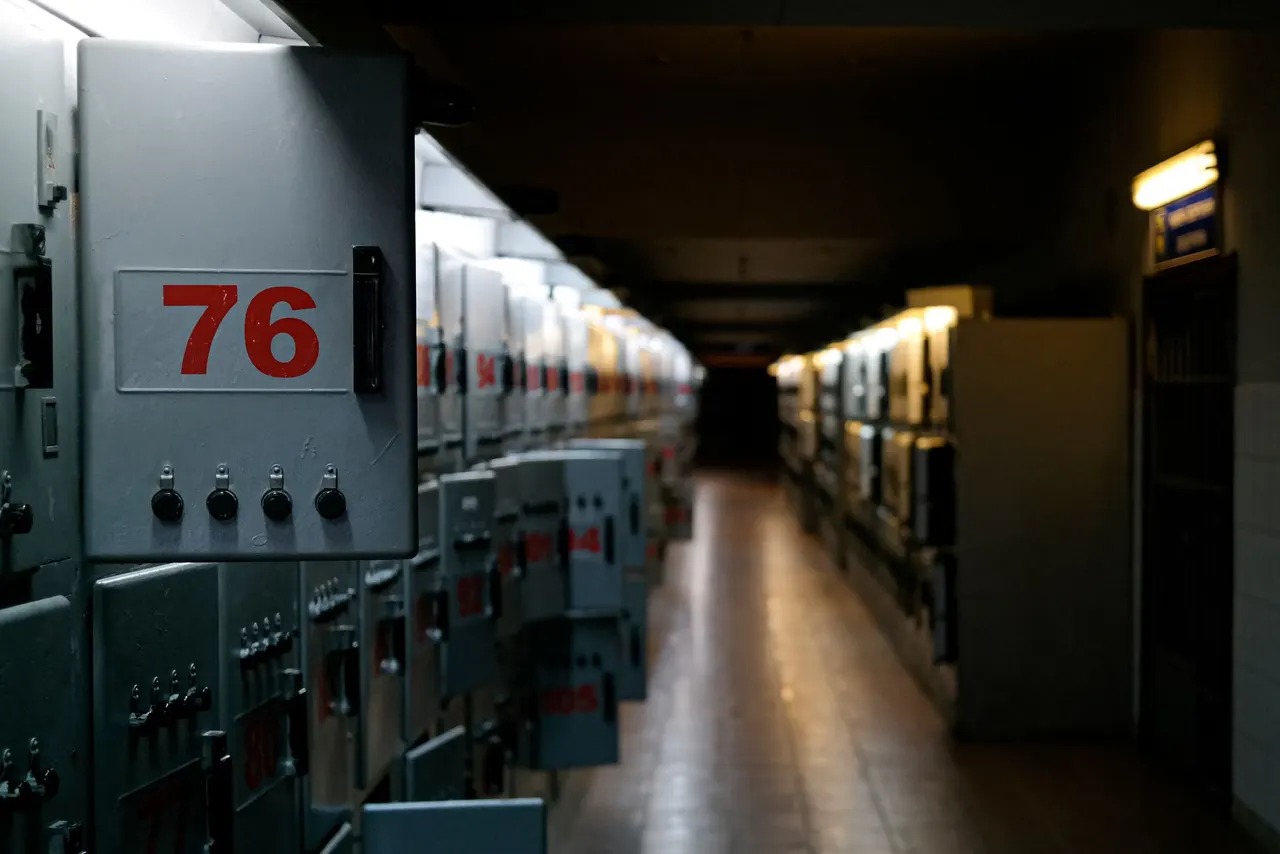
Before: A West Haven retail unit had a 100-amp fuse box with two oversized fuses and no main breaker. The tenant could not add a second cooler, and the landlord could not get insurance without a code correction.
After: We replaced the fuse box with a 200-amp Square D panel, added a main breaker and GFCI protection, and labeled every circuit. The unit passed inspection and the tenant added the cooler without a second upgrade.
We recommend an annual panel check: torque the lugs, look for heat discoloration, and test the GFCI breakers. It takes about 30 minutes and catches loose connections early.
Before: A Downtown Rocky Mount restaurant tripped its main every time the fryer, hood, and AC ran together. The 200-amp panel was maxed and the meter socket was cracked. Lunch service was getting interrupted two or three times a week.
After: We upsized to a 400-amp service with a new meter base and service entrance cable, balanced the circuits across phases, and labeled the panel. The owner has run a full lunch rush with no trips since.
Keep the area around the panel clear and have us clamp the main once a year. If you add equipment, call before you plug it in so we can check the load.
Before: A Battleboro warehouse had a rusted panel and flickering lights after storms. The grounding electrode was loose and the service entrance cable showed moisture damage. The insurance carrier flagged it.
After: The lights hold steady and the insurance review cleared.
Check the panel cover and conduit for moisture each season. If you see rust or water stains, call us before the next storm season.
Most panel calls start with a symptom: a breaker that will not stay on, lights that dim when a motor starts, or a panel that feels warm. Here are the ones we see most in Nash County commercial buildings.
A right-sized panel keeps your business running without nuisance trips.
Going from 200 to 400 amps gives you headroom for a second walk-in, a bigger hood system, or EV chargers in the lot. We size the bus and breakers for what you plan to add, not just what you run today, so you are not paying for another upgrade in two years.
Overloaded panels trip when the compressor, fryer, and AC all start at once. We run a clamp meter on each circuit, balance the load across phases, and replace worn breakers with Square D or Eaton units rated for the duty cycle. Most customers stop seeing trips the same week.
NEC 2020 and NEC 2023 changed grounding, GFCI, and labeling rules. An inspector who finds a rusted panel or missing ground can red-tag the building.
Double-tapped breakers, aluminum wiring, and fuse box hazards are the three things we find most in older Rocky Mount commercial buildings. A new panel with UL listed breakers and a proper grounding wire removes the heat buildup that starts fires. It is the cheapest insurance you will ever buy.
What a written scope covers and what shapes it. Prices are set by the business after the first look.
Included
Depends on
Clear records you can keep and share.
Typed breaker labels for your panel
Panel interior before cover goes on
Signed city inspection card
Written load calculation summary
Commercial panels come in a few sizes and styles. Here is what the terms mean when you get a quote.
Common for small retail and office units
Common for restaurants and light industrial
A smaller panel fed from the main
A list like this tells people straight away whether you cover their street. Not listed? Call and ask: it only takes a minute.
Based in Rocky Mount and covering the places around it. Pick one for local details.
A 200-amp swap with a new panel and breakers sits near the low end. A 400-amp service with a new meter socket, grounding, and permit lands higher. We give you a written number after the load check.
You need one if your breakers trip when normal equipment starts, if the panel is rusted or warm to the touch, or if you have a fuse box or double-tapped breakers. Adding a walk-in cooler, oven, or EV charger usually pushes a 100-amp panel past its limit. An inspector who finds any of those can red-tag the building.
The on-site work takes four to eight hours for a standard 200-amp swap. Add a day if we replace the meter base and service entrance cable. Permits in Rocky Mount clear in two to five business days, so most jobs finish within a week of your approval. We schedule the outage around your hours.
Yes. We pull the electrical permit, post it on site, and meet the city inspector for the rough and final. You get the signed inspection card and a photo record of the panel. If the inspector flags anything, we correct it and cover the re-inspection. That is part of every commercial electrical service Rocky Mount NC job we run.
Other services from the same team.
Call (252) 809-7893 and we will walk your building the same day. You get a written scope, a permit, and a power-down window that fits your hours. No charge for the visit.
Call us at (252) 809-7893 or send a message and we will get back to you the same business day. We answer the phone during normal hours and roll on emergency panel calls after hours. Tell us what the panel is doing and we will tell you what it takes to fix it.